
Most sugar cookie recipes make you wait. Mix the dough, wrap it, chill it for an hour, roll it out, chill it again, and only then bake it. Small batch sugar cookies without chilling dough skip all of that waiting. Softened butter, sugar, one egg, and a careful balance of flour and baking powder turn into soft, buttery cookies with lightly crisp edges, scooped straight from the bowl onto the tray and baked in about ten minutes, with no fridge time at all.
That is why this recipe is such a good weeknight bake. Much like our crispy edges chewy center chocolate chip cookies and our oatmeal chocolate chip bars without refined sugar, this batch is built around one bowl and a hot oven, with simple steps that are hard to get wrong. The rest of this guide walks through that balance: why this dough does not need chilling, why baking powder beats baking soda here, how to tell when these cookies are done without drying them out, and how to store them so they stay soft for days.
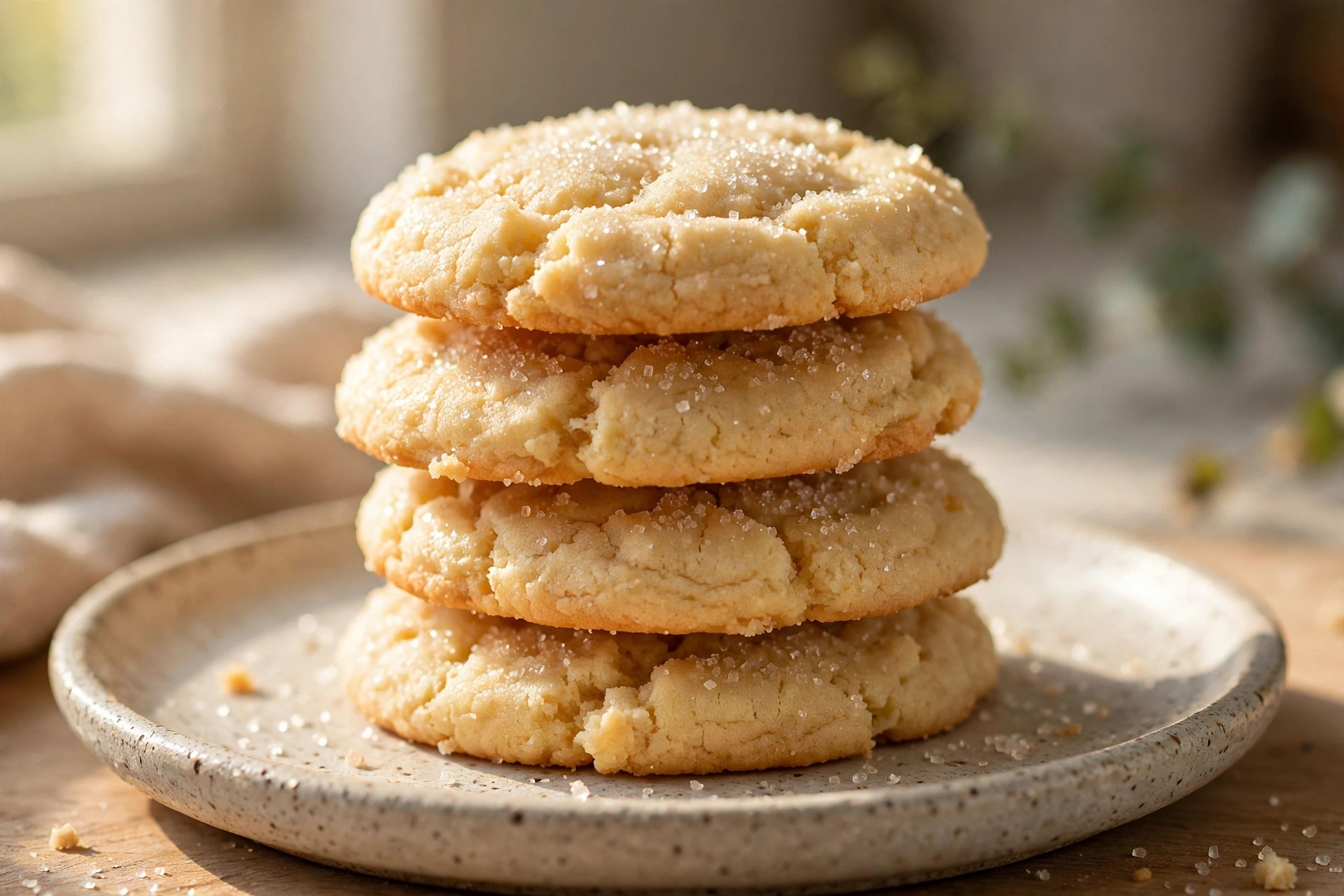
How Small Batch Sugar Cookies Without Chilling Dough Stay Thick and Soft
Chilling is usually recommended for sugar cookies for a simple reason: cold butter melts more slowly in the oven, so the cookies spread less and hold their shape better. This recipe avoids that problem in a different way, by using softened butter that is creamed only briefly, and by keeping the dough a little drier than a typical sugar cookie dough. With less moisture to melt and spread, and with flour that is measured carefully rather than scooped, the cookies hold their thickness even straight from the bowl, without any fridge time at all. The result is a thick, soft cookie with edges that set and crisp lightly, rather than a thin, flat cookie that tastes mostly of butter and sugar.
Baking powder is the second piece of this puzzle. Baking soda, which many sugar cookie recipes use, needs an acidic ingredient to react with, and it encourages spreading and browning, which is the opposite of what you want in a no-chill cookie. Baking powder, by contrast, reacts with heat alone, so it gives these cookies a gentle lift in the oven, puffing them up slightly and keeping the centres soft, without pushing them to spread thin. That is why this recipe uses baking powder and no baking soda at all, and why swapping them will change the cookies completely, making them flatter, darker, and crisper than intended.
The third piece is the small batch itself. A small batch, just sixteen cookies, means the dough is mixed, scooped, and baked quickly, before the butter has time to warm up too much in a hot kitchen or from overmixing. A large batch, by contrast, sits in the bowl while you scoop tray after tray, and the butter softens further with every minute, so the later trays spread more than the first. By keeping the batch small, and by baking one tray at a time, every cookie in this recipe bakes with the same thick, soft result, with no chilling needed to rescue a dough that has gone too warm.
Why This Small Batch Sugar Cookie Recipe Works So Well
- No Chilling, No Waiting: Mix, scoop, and bake straight away, with no fridge time at all, so the whole batch is ready in about half an hour.
- Thick, Soft Centres: Softened butter creamed briefly, careful flour measuring, and baking powder keep the cookies thick and soft, not thin and flat.
- Small Batch, Less Waste: Just sixteen cookies, enough for a family dessert or a small gathering, without a mountain of leftovers going stale.
- Easy to Change: Roll in coloured sugar, add lemon zest, or press sprinkles into the tops, without changing the base dough at all.
What Each Ingredient Does in This Sugar Cookie Dough
Because this dough skips chilling, each ingredient here has a job that cannot be skipped or swapped casually. Here is what each one actually does, and what happens if you change it.
1. Unsalted Butter, Softened (115g / 1/2 Cup)
Butter should be soft enough to dent easily with a finger, but not melted or greasy. Softened butter creams with the sugar to trap a little air, which is what keeps these cookies thick and soft instead of thin and crisp. Melted butter will make the dough spread too much and the cookies will bake thin, with no chilling step to rescue them, so this is the one ingredient where temperature matters most. If your butter is cold from the fridge, cut it into cubes and leave it at room temperature for 30 minutes. Do not microwave it to soften it quickly, or parts of it will melt and the dough will be uneven. Precision Tip: Weigh the butter if you can. Too much butter will make the cookies greasy and flat, while too little will make them dry and crumbly.
2. Granulated Sugar (150g / 3/4 Cup, Plus 50g / 1/4 Cup for Rolling)
Granulated sugar is the main flavour here, and it also gives the cookies their lightly crisp edges and sparkling tops. Creaming it with the butter dissolves it partially into the fat, which is what keeps the centres soft, while rolling the dough balls in extra sugar before baking gives the finished cookies a sweet, crunchy coating that contrasts with the soft centre. Use plain white granulated sugar, not caster sugar, which is finer and will dissolve too quickly, and not brown sugar, which will make the cookies softer, darker, and more caramel-flavoured, rather than classic sugar cookies. Keep the rolling sugar separate, in a small bowl, so the dough does not pick up extra sugar while you are scooping.
3. Large Egg (1, Room Temperature)
One whole egg binds the dough and gives the cookies their structure, without making them cakey. A second egg would make the cookies puffier and more cake-like, which is not what you want here. Room-temperature eggs mix into the butter and sugar more evenly than cold eggs, and they help the dough come together faster. If your egg is cold from the fridge, sit it in warm water for five minutes before you start. Do not add extra egg white or yolk, or the dough will become too wet to scoop without chilling, which defeats the whole point of this recipe.
4. Vanilla Extract (1 Teaspoon) and Almond Extract (1/4 Teaspoon, Optional)
Vanilla is the main flavour in a sugar cookie, alongside butter and sugar, so use a good vanilla extract and do not skimp on it. Almond extract, just a quarter teaspoon, adds a subtle bakery-style depth that makes these cookies taste more like a bakery sugar cookie and less like a plain butter cookie, but it is optional, and the cookies will still be excellent without it. Add both with the egg, so they mix evenly through the dough. If you use too much almond extract, it will overpower the vanilla and make the cookies taste artificial, so measure it carefully, not by eye.
5. All-Purpose Flour (220g / 1 3/4 Cups, Spooned and Levelled)
Flour is the quiet ingredient here, and it is also the easiest one to get wrong. Spoon it into your measuring cup and level it off, or weigh out 220 grams, rather than scooping straight from the bag. Scooping packs the flour down and can easily add 20 to 30 extra grams, which is enough to turn a soft cookie into a dry, puffy one, and in a no-chill recipe, too much flour is the difference between a thick, soft cookie and a dry, crumbly one. Too little flour, by contrast, will make the dough too wet to hold its shape without chilling, so the cookies will spread flat. Weighing the flour is the single best thing you can do to make this recipe work first time. Critical Rule: Spoon and level, or weigh, the flour, every time, and do not scoop from the bag, or the cookies will not hold their shape without chilling.
6. Baking Powder (1 Teaspoon) and Fine Salt (1/4 Teaspoon)
Baking powder is the leavening here, and it is what gives these cookies their gentle lift without encouraging spreading. Use baking powder, not baking soda, and check that your baking powder is fresh, because old baking powder loses its lift and the cookies will bake flat and dense. Salt sharpens the butter, sugar, and vanilla without making the cookies taste salty. If you are using salted butter, leave the salt out entirely, or the cookies will taste noticeably salty once baked.
7. Sprinkles or Coloured Sugar, for Topping (Optional)
Sprinkles are not just decoration here. They add colour, crunch, and a festive look that makes these cookies feel special, without changing the dough or the bake time at all. Press sprinkles or coloured sugar into the tops of the dough balls after rolling them in plain sugar, so they stick, and bake as usual. Do not mix sprinkles into the dough itself, or the colours will bleed and the cookies will look muddy, rather than bright and clean on top. If you skip sprinkles, the plain sugar coating alone still gives a classic, sparkling sugar cookie top.
Step-by-Step Instructions: Cream, Mix, Scoop, Bake, Rest
Step 1: Oven Setup and Tray Preparation
Position your oven racks in the centre and upper-middle positions and preheat your oven to 350°F (175°C). Line two baking trays with parchment paper. Do not grease the trays, or the cookies will spread too much and lose their thick, soft centres. Parchment gives just enough grip to hold the cookies thick while letting them spread a little. If you only have one tray, bake in batches and let the tray cool between batches, or the second batch will spread too fast on a hot tray.
Step 2: Creaming Butter and Sugar
Place the softened butter and 150g of granulated sugar in a large bowl and beat with a spatula, wooden spoon, or hand mixer for 1 to 2 minutes, until the mixture is pale, fluffy, and slightly lighter in colour. This creaming step traps air in the dough, which is what keeps the cookies thick and soft. Do not cream for much longer than two minutes, or you will whip in too much air and the cookies will puff up in the oven and then fall flat. The mixture should look like pale, soft buttercream, not like a thin, greasy paste.
Step 3: Adding Egg and Vanilla
Add the egg, vanilla, and almond extract if using, to the butter and sugar mixture, and beat for 1 minute until the mixture is smooth, pale, and slightly thickened. Scrape down the sides of the bowl halfway through, so no butter or sugar is left unmixed at the edges. Do not beat for much longer than a minute. Over-beating at this stage will make the cookies puffy and cakey, rather than thick and soft in the centre.
Step 4: Folding in Flour, Baking Powder, and Salt
Sift or whisk the flour, baking powder, and salt together in a separate bowl, then fold them into the butter mixture with a spatula using broad, gentle strokes until the last white streak just disappears. This should take no more than 20 to 30 seconds of folding. The dough will be soft, thick, and will hold its shape when you lift the spatula. If you keep stirring past this point, you will develop gluten and the finished cookies will be tough instead of tender, no matter how good your butter and sugar are.
Step 5: Scooping, Rolling, and Spacing
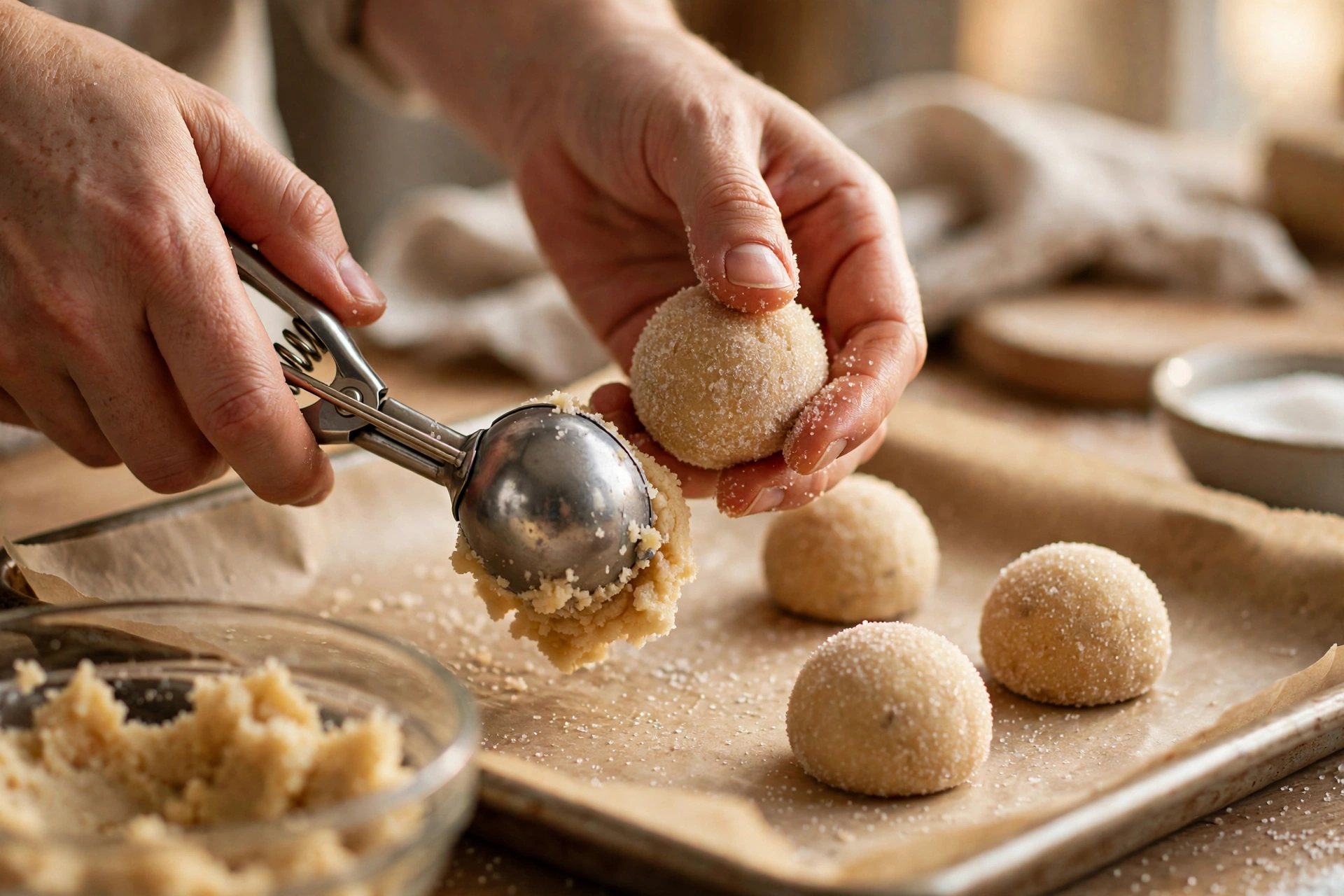
Scoop the dough into balls of about 2 tablespoons each (about 40g) and roll each ball between your palms until smooth. Roll each ball in the remaining 50g of granulated sugar, until evenly coated, and press sprinkles into the tops if using. Place the balls on the prepared trays, leaving at least 2 inches between each ball. This spacing is essential. These cookies spread a little as they bake, and if they are too close together they will merge into one giant cookie with no defined edges at all. Do not flatten the balls before baking, or the cookies will bake thin and crisp instead of thick and soft.
Step 6: Baking
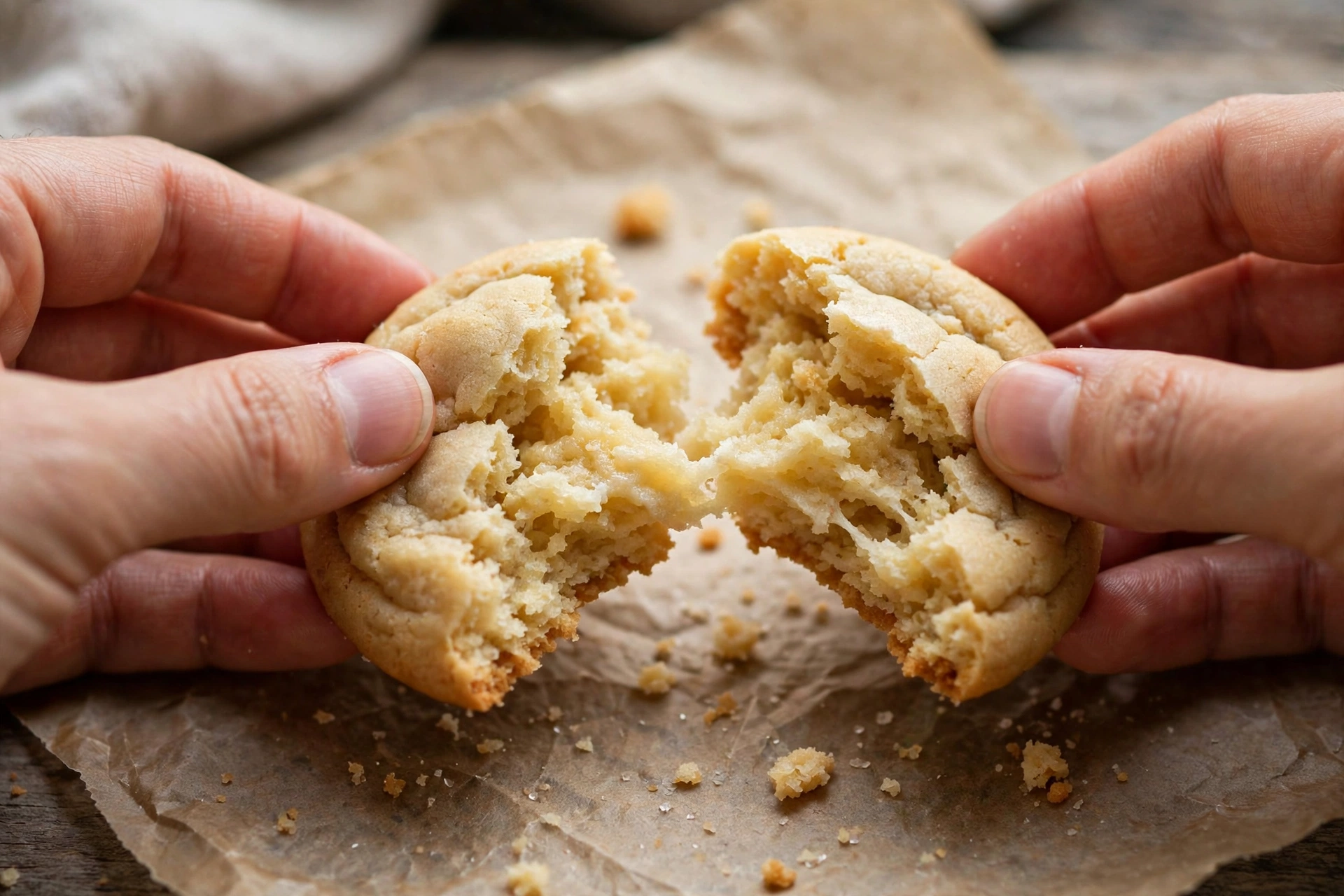
Bake one tray at a time at 350°F (175°C) for 9 to 11 minutes. Start checking at 9 minutes. The edges should look set and lightly golden, the tops should look dry and slightly cracked, and the centres should still look slightly soft and pale. That soft centre is exactly what you want. It will set as the cookies rest on the tray. A cookie that looks fully firm in the oven will be dry and crumbly once it cools, no matter how good your dough was.
Step 7: Resting on the Tray and Transferring
Remove the tray from the oven and let the cookies rest on the tray for 10 minutes before you move them. This pan rest is part of the recipe, not a suggestion to ignore if you are in a hurry. The centres are still setting during this time, and moving the cookies too early will break them. After 10 minutes, transfer them to a wire rack with a spatula and let them cool completely, or eat them warm. A warm cookie will have a softer centre and a less set edge than a fully cooled one, and both are good, just different.
Where No-Chill Sugar Cookies Usually Go Wrong
Because this dough skips chilling, small mistakes show up more clearly than they do in a chilled sugar cookie. Here are the four that cause the most trouble, and how to avoid each one.
1. Butter That Is Too Warm or Melted
If your butter is melted, or even just very soft and greasy, the dough will spread too much in the oven, and there is no chilling step to rescue it. The cookies will bake thin, flat, and greasy, with no thick, soft centre at all. Use butter that is soft enough to dent with a finger, but still holds its shape and is not shiny or oily. If your butter has gone too soft, chill the dough for just 10 minutes, not an hour, as a rescue, but do not make a habit of it, because the recipe is designed to work without chilling when the butter temperature is right.
2. Scooping Flour From the Bag
Scooping flour straight from the bag packs it down and can easily add 20 to 30 extra grams, which is enough to turn a soft cookie into a dry, puffy one, and in a no-chill recipe, too little flour is just as bad, because the dough will be too wet to hold its shape. Spoon the flour into your measuring cup and level it off, or weigh out 220 grams, every time. This single habit is the difference between a thick, soft sugar cookie and a flat or dry one, and it matters more here than in almost any other cookie recipe.
3. Overbaking Past the Soft-Centre Stage
The most common reason these cookies turn dry is waiting until they look fully firm in the oven. A soft sugar cookie should come out with a centre that still looks slightly soft and pale. It will set during the 10-minute pan rest, and that residual heat is what finishes the centre without drying it out. If you wait until the centre looks golden and firm in the oven, you have already gone too far, and no amount of resting will bring the softness back.
4. Flattening the Dough Balls Before Baking
It is tempting to flatten sugar cookie dough balls with a glass or fork, as you would for a peanut butter cookie, but these cookies are designed to bake thick and soft from a round ball. Flattening them before baking will make them bake thin and crisp, with no soft centre at all, no matter how good your dough is. Leave the balls round, roll them in sugar, and let the oven do the spreading. The cookies will flatten just enough on their own, to a thick, soft disc with lightly crisp edges.
Variations Worth Trying With This Sugar Cookie Base
Once you have the base recipe working, it is easy to change the flavour without changing the structure. Keep the butter, sugar, egg, flour, and baking powder exactly as written, and only change the extras below.
- Lemon Sugar Cookies: Add 1 tablespoon of fresh lemon zest to the butter and sugar when creaming, and swap vanilla for lemon extract if you like. Lemon adds brightness that pairs well with sugar cookies, without changing the bake time at all.
- Coloured Sugar Cookies: Roll the dough balls in coloured sugar instead of plain granulated sugar, or press coloured sprinkles into the tops after rolling. The cookies will look festive and bright, with no change to flavour or texture, and they are perfect for holidays and birthdays.
- Chocolate Chip Sugar Cookies: Fold 100g of white or semi-sweet chocolate chips into the dough after the flour, keeping everything else the same. Chocolate chips add sweet, melty pockets that contrast with the plain sugar cookie base, without changing the bake time.
- Almond Sugar Cookies: Increase the almond extract to 1/2 teaspoon and top the cookies with sliced almonds before baking, pressing them lightly into the dough balls. Almonds add crunch and a stronger bakery flavour, without changing the structure of the cookie at all.
How to Store and Freeze These Cookies
Because these cookies are made with softened butter and granulated sugar, they store well as long as you keep them airtight and do not store them while warm.
Room Temperature Storage
Store fully cooled cookies in an airtight container at room temperature for up to 4 to 5 days. Place a sheet of parchment between layers so the sugar coatings do not stick to each other. Unlike crisp cookies that go stale quickly, these cookies stay soft because the butter and sugar hold moisture. Do not store them in the fridge for everyday eating, or they will firm up and taste dry until they come back to room temperature.
Freezing Baked Cookies
Place cooled cookies in a single layer inside a freezer-safe container separated by parchment paper. Freeze for up to 3 months. Thaw on the counter for 30 minutes before eating. Thawed cookies will be a little softer than fresh ones, which is normal for a soft butter cookie, and the sugar coating may look a little less sparkling after thawing, but the flavour will be the same. Do not refreeze thawed cookies.
Freezing Scooped Dough
Scoop the dough into balls, roll them in sugar, freeze them on a tray until solid, then transfer them to a freezer bag for up to 3 months. Bake from frozen at the same temperature, adding 2 minutes to the bake time, and check for the same soft-centre stage. This is the best way to have fresh sugar cookies on demand without mixing a full batch every time, and the sugar coating bakes just as well from frozen.
Frequently Asked Questions About These Cookies
Why did my cookies spread flat without chilling?
Flat cookies usually come from one of three things: butter that was too warm or melted, flour that was scooped too lightly, or over-creaming the butter and sugar. Check butter temperature first, because that is the most common cause. Use butter that dents easily but still holds its shape, cream for only 1 to 2 minutes, and spoon and level, or weigh, the flour. If all three are right and the cookies still spread, your oven may be running hot, so check it with a thermometer and reduce the temperature by 10 degrees if needed.
Can I chill this dough anyway, just to be safe?
Yes, but you do not need to, and chilling will change the cookies slightly. Chilled dough will bake a little thicker and a little less spread, with a slightly firmer texture, because the butter will melt more slowly. If you do chill it, let the dough sit at room temperature for 10 minutes before scooping, or it will be too firm to roll, and add 1 minute to the bake time, checking for the same soft-centre stage. Do not chill it for more than an hour, or the dough will dry out at the edges.
Can I roll these cookies out and cut shapes?
No, not as written. This dough is designed for scooped, round cookies, not for rolled and cut shapes, which need a firmer, colder dough to hold their edges. If you roll this dough out, it will be too soft to cut cleanly, and the shapes will spread and lose their definition in the oven. For cut-out sugar cookies, use a dedicated roll-out recipe with chilling, and save this recipe for soft, round, no-chill cookies, which is what it does best.
Small Batch Sugar Cookies Without Chilling Dough
Bake soft, buttery sugar cookies with lightly crisp edges, made in one bowl and baked straight away, in 35 minutes total.
Ingredients
Baker's Secret: Use butter that dents easily but still holds its shape, and spoon and level, or weigh, the flour. Those two habits are what let this dough bake thick and soft with no chilling at all.
Step-by-Step Instructions
- 1Preheat & Prep Trays: Preheat oven to 350°F (175°C). Line two trays with parchment paper, ungreased.
- 2Cream Butter & Sugar: Beat softened butter with 150g sugar for 1 to 2 minutes, until pale and fluffy.
- 3Add Egg & Vanilla: Beat in the egg, vanilla, and almond extract if using, for 1 minute, until smooth.
- 4Fold in Flour: Fold in flour, baking powder, and salt gently for 20 to 30 seconds, until the last white streak disappears.
- 5Scoop & Roll: Scoop 2-tablespoon balls, roll in the remaining sugar, and space 2 inches apart, unflattened.
- 6Bake: Bake one tray at a time at 350°F (175°C) for 9 to 11 minutes, until edges are set and centres are soft.
- 7Rest & Cool: Rest on the tray for 10 minutes, then transfer to a wire rack and cool completely before storing.
Pingback: No Butter Sugar Cookies With Vegetable Oil - Firaa Bakes