
Some cookies are worth making from scratch, and some are worth making the smart way. Soft lemon crinkle cookies with cake mix fall firmly in the second group. One box of lemon cake mix, two eggs, a little oil, and fresh lemon zest turn into bright, soft cookies with a thick, crackled coating of powdered sugar, in about half an hour, with no creaming, no measuring out flour and leavening, and no dough to chill for hours.
That is why this recipe is such a reliable shortcut bake. Much like our crispy edges chewy center chocolate chip cookies and our one bowl chewy blondies with melted butter, this batch is built around one bowl and a hot oven, with simple steps that are hard to get wrong. The rest of this guide walks through that balance: why cake mix makes such a soft crinkle cookie, why a double coating of powdered sugar matters, how to tell when these cookies are done without drying them out, and how to store them so they stay soft for days.
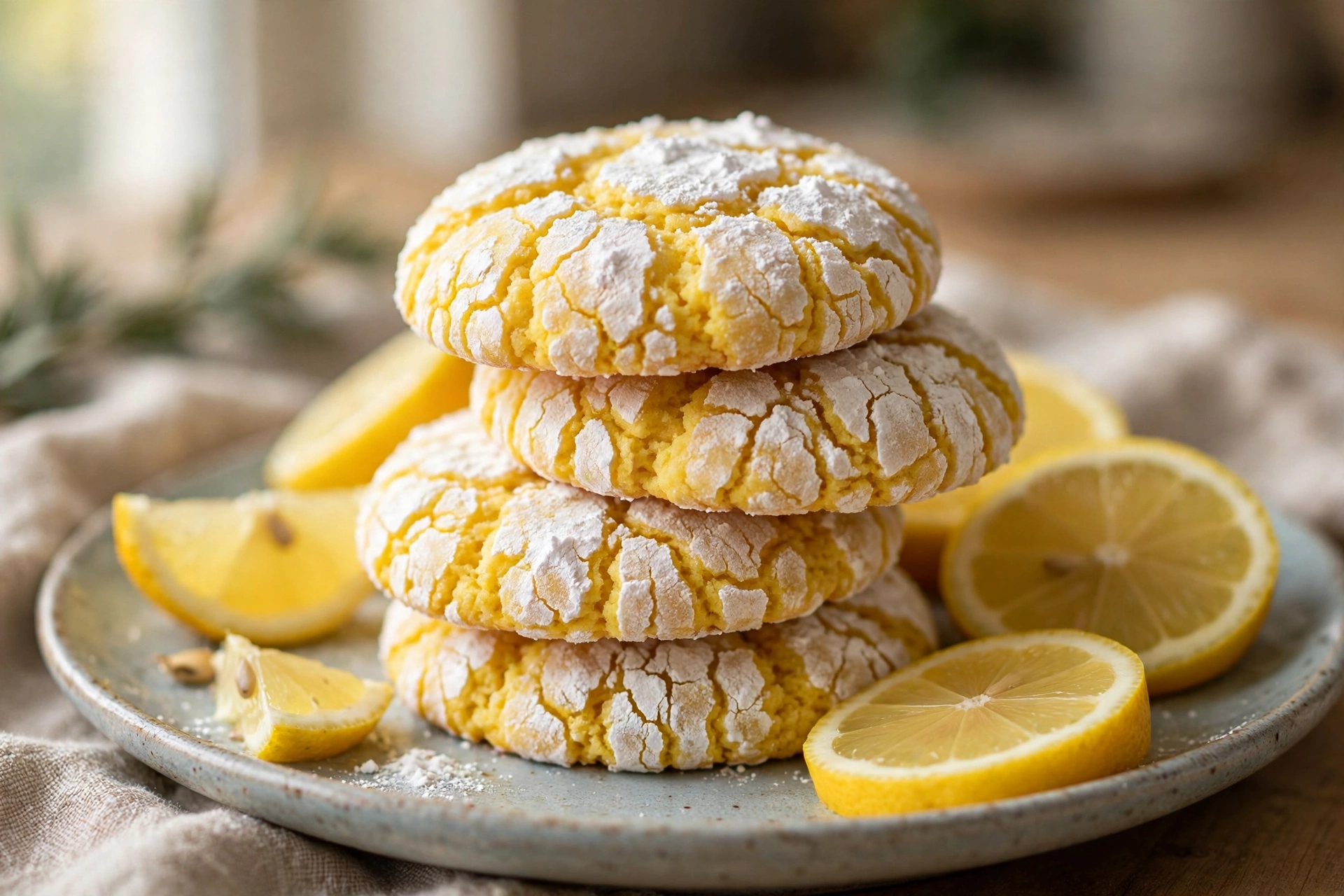
How Soft Lemon Crinkle Cookies with Cake Mix Get Their Crackle and Soft Centre
Cake mix is not just a shortcut here. It is the reason these cookies stay soft. A boxed lemon cake mix already contains flour, sugar, leavening, and flavouring in the right proportions, and it is designed to bake into a tender, moist crumb. When you turn that mix into cookie dough by adding only eggs and oil, instead of the water and eggs a cake would need, you get a dough that is much thicker than cake batter but still bakes with that same tender softness. The result is a cookie that feels more like a tiny, handheld cake than a crisp biscuit, which is exactly what a crinkle cookie should be.
The crackle comes from the powdered sugar coating, and from how that coating behaves in the oven. When a sugar-coated dough ball bakes, the outside sets first while the inside is still rising and spreading. As the inside pushes outward, it cracks the set sugar shell into the white, web-like pattern that gives crinkle cookies their name. That is why a thick, even coating matters so much. A thin dusting will melt into the dough and disappear, leaving a pale, plain cookie. A thick, double coating stays white and crackles cleanly, because there is enough sugar on the surface to set before the inside finishes spreading.
The third piece is fresh lemon. Cake mix lemon flavour on its own can taste a little flat and artificial, especially after baking. Fresh lemon zest and a spoonful of lemon juice fix that without changing the dough. Zest carries the bright, floral oils from the lemon peel, which survive baking far better than juice alone, while juice adds a gentle tartness that balances the sweetness of the cake mix and the powdered sugar. Together, they make the cookies taste like real lemon, not just lemon flavouring, which is the difference between a good cake mix cookie and a great one.
Why This Cake Mix Lemon Batch Works So Well
- One Box, One Bowl: A single box of lemon cake mix plus eggs, oil, zest, and juice makes the whole dough. No separate flour, sugar, or leavening to measure.
- Soft, Not Dry: Cake mix dough bakes tender and moist, with a thick, crackled sugar shell and a soft, bright yellow centre that stays soft for days.
- Ready in About Half an Hour: Fifteen minutes of mixing and rolling, about eleven minutes in the oven per tray, and ten minutes resting on the tray.
- Easy to Change: Add white chocolate chips, swap lemon for orange zest, or finish with a lemon glaze, without changing the base dough at all.
What Each Ingredient Does in This Lemon Crinkle Dough
Because this dough starts with a box mix, each added ingredient has a job that cannot be skipped or swapped casually. Here is what each one actually does, and what happens if you change it.
1. Lemon Cake Mix (1 Box, About 432g / 15.25 oz)
Use a standard lemon cake mix, not a lemon pound cake mix or a lemon muffin mix, which have different flour and sugar ratios and will bake denser and drier. Any brand works, as long as the box is the standard size. Do not add the ingredients listed on the box for a cake. Those instructions are for a cake batter, with water and more eggs, and they will give you a thin batter, not a scoopable dough. This recipe uses only the dry mix itself, plus the eggs, oil, and lemon below. Precision Tip: Check the box weight. Most lemon cake mixes are around 432 grams, but a smaller box will need a little less oil and egg, or the dough will be too wet to roll.
2. Large Eggs (2, Room Temperature)
Eggs bind the cake mix into a dough and give the cookies their soft, cake-like structure. Two whole eggs, rather than one egg plus extra liquid, keep the dough thick enough to roll into balls without sticking to your hands too much. Room-temperature eggs mix into the cake mix more evenly than cold eggs, and they help the dough come together faster. If your eggs are cold from the fridge, sit them in warm water for five minutes before you start. Do not add a third egg, or the dough will be too wet and the cookies will spread flat instead of staying thick and crinkly.
3. Vegetable Oil (80ml / 1/3 Cup)
Oil, rather than butter, is what keeps these cookies soft. Butter contains water and milk solids, which can make a cake mix cookie a little firmer and more biscuit-like as it cools. Oil is pure fat, so it coats the flour without adding water, and the finished cookies stay tender for longer. Use a neutral oil, such as vegetable, canola, or sunflower oil, so the lemon flavour stays clean. Olive oil will work, but its stronger flavour will compete with the lemon, so save it for savoury baking.
4. Fresh Lemon Zest (1 Tablespoon) and Lemon Juice (1 Tablespoon)
Zest is the most important flavour addition in this recipe. It carries the bright, floral oils from the lemon peel, which survive baking and make the cookies taste like real lemon. Juice adds tartness and a little extra moisture, but on its own it would not be enough, because much of its flavour cooks off in the oven. Zest only the yellow part of the peel, not the white pith underneath, which tastes bitter. One tablespoon of zest is about the zest of one large lemon, and one tablespoon of juice is about half a lemon, so you can zest and juice the same lemon for this recipe.
5. Vanilla Extract (1 Teaspoon, Optional but Recommended)
Vanilla does not make these cookies taste like vanilla. It rounds out the lemon and makes the cake mix flavour taste fuller rather than sharp or artificial. Add it with the eggs and lemon juice, so it mixes evenly through the dough. If you are out of vanilla, you can leave it out and the cookies will still work, but they will taste a little more one-note, especially if your cake mix is on the sweet side.
6. Powdered Sugar, for Rolling (100g / About 3/4 Cup, Plus More if Needed)
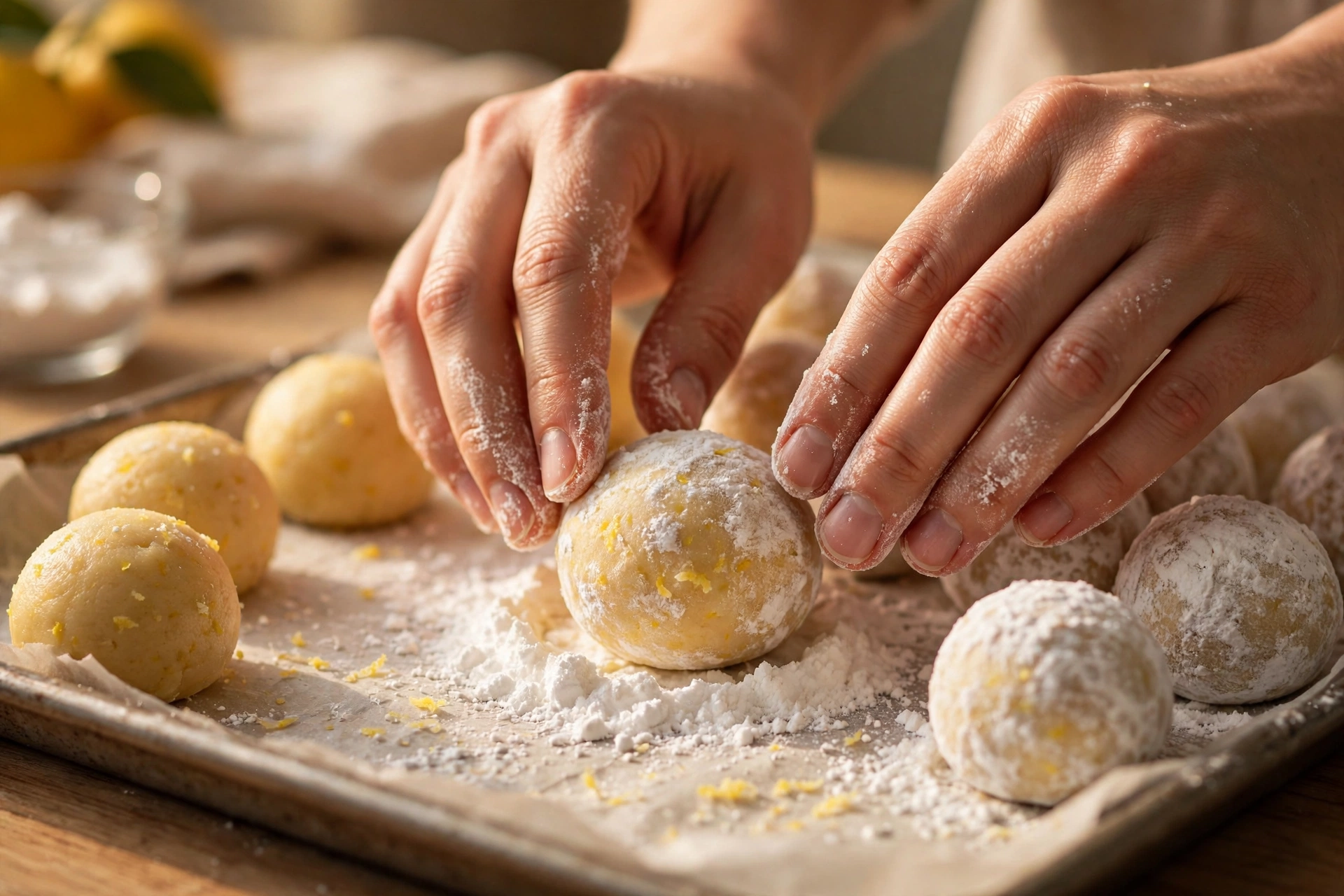
Powdered sugar is not just a decoration here. It is what creates the crackle. Roll each dough ball first in granulated sugar if you like, then generously in powdered sugar, until the ball is thickly and evenly coated, with no yellow dough showing through. A thin coating will melt into the dough in the oven and disappear. A thick coating sets on the outside first, then cracks as the inside rises, giving you the white, web-like pattern. Keep extra powdered sugar nearby, because the dough will absorb some of it as you roll, and you will need to top up the bowl as you go. Critical Rule: Do not skimp on the coating. If you can see yellow dough through the sugar, roll it again.
7. Granulated Sugar, for Rolling (50g / 1/4 Cup, Optional)
A first roll in granulated sugar, before the powdered sugar, helps the powdered sugar stick more evenly and gives the finished cookies a very light crunch at the very edge of the crackle. It is optional, and the cookies will still crackle without it, but it does make the coating more reliable, especially if your dough is a little sticky. If you skip it, roll the balls twice in powdered sugar instead, shaking off the excess between rolls, so the coating is still thick enough to crackle.
Step-by-Step Instructions: Mix, Roll, Bake, Rest
Step 1: Oven Setup and Tray Preparation
Position your oven racks in the centre and upper-middle positions and preheat your oven to 350°F (175°C). Line two baking trays with parchment paper. Do not grease the trays, or the cookies will spread too much and lose their thick, soft centres. Parchment gives just enough grip to hold the cookies thick while letting them spread a little and crackle. If you only have one tray, bake in batches and let the tray cool between batches, or the second batch will spread too fast on a hot tray.
Step 2: Mixing the Dough
Place the lemon cake mix in a large bowl and break up any lumps with a whisk. Add the eggs, oil, lemon zest, lemon juice, and vanilla, and stir with a spatula or wooden spoon until a thick, soft dough forms, with no dry mix left at the bottom of the bowl. This should take about 1 to 2 minutes of stirring. The dough will be soft and a little sticky, which is normal for a cake mix cookie. Do not overmix it. Stirring for much longer will develop gluten and make the cookies tough instead of tender, even though you started with a cake mix.
Step 3: Rolling in Sugar
Scoop the dough into balls of about 1 1/2 tablespoons each (about 30g) and roll each ball between your palms until smooth. Roll each ball first in granulated sugar if using it, then generously in powdered sugar, until thickly and evenly coated, with no yellow dough showing through. Place the coated balls on the prepared trays, leaving at least 2 inches between each ball. This spacing is essential. These cookies spread as they bake, and if they are too close together they will merge and lose their crackle. If the dough is too sticky to roll, chill it for 15 minutes, not longer, or it will become too firm to roll evenly.
Step 4: Baking
Bake one tray at a time at 350°F (175°C) for 10 to 12 minutes. Start checking at 10 minutes. The edges should look set and lightly golden, the tops should be crackled and white, and the centres should still look slightly soft and pale. That soft centre is exactly what you want. It will set as the cookies rest on the tray. A cookie that looks fully firm in the oven will be dry and crumbly once it cools, no matter how good your dough was.
Step 5: Resting on the Tray and Transferring
Remove the tray from the oven and let the cookies rest on the tray for 10 minutes before you move them. This pan rest is part of the recipe, not a suggestion to ignore if you are in a hurry. The centres are still setting during this time, and moving the cookies too early will break them, because they are at their softest straight from the oven. After 10 minutes, transfer them to a wire rack with a spatula and let them cool completely. A warm cookie will have a softer centre and a less set crackle than a fully cooled one, and both are good, just different.
Step 6: Cooling Completely for the Best Crackle
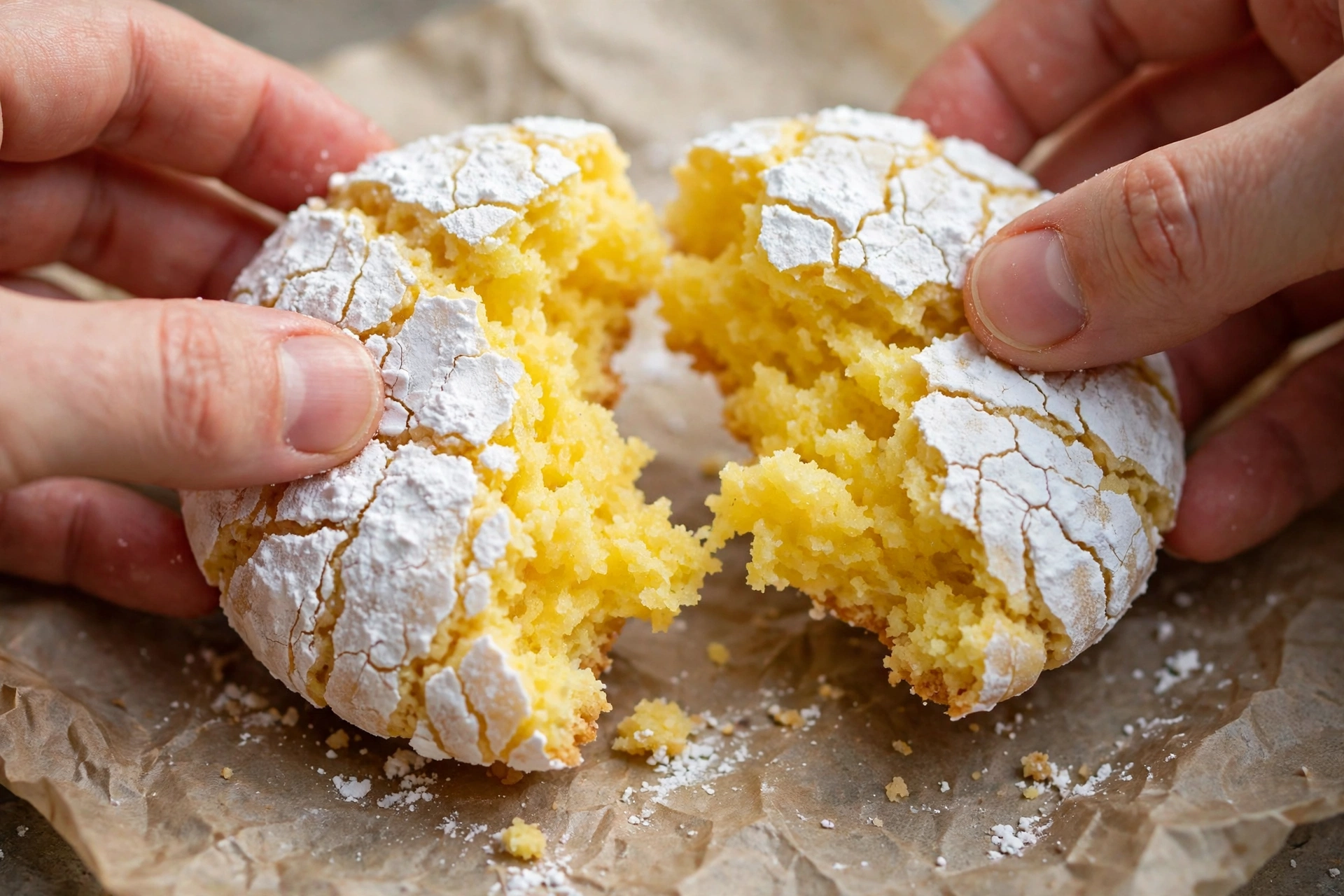
Let the cookies cool completely on the wire rack before stacking or storing them. As they cool, the powdered sugar coating sets fully and the crackle pattern becomes sharper and whiter. Stacking warm cookies will smudge the sugar and stick the tops together, which ruins the crackle you worked to create. Once fully cool, the cookies should be soft in the centre, lightly crisp at the very edge of the crackle, and bright yellow inside when broken open.
Step 7: Storing for Softness
Once completely cool, store the cookies in an airtight container at room temperature, with parchment between layers so the sugar coatings do not stick to each other. Do not store them while still warm, or condensation will dissolve the powdered sugar and make the tops wet and sticky. Properly cooled and stored cookies will stay soft for several days, and the crackle will stay white and sharp, as long as the container stays sealed.
Where Lemon Crinkle Cookies Usually Go Wrong
Because this dough starts with a box mix, small mistakes show up more clearly than they do in a from-scratch cookie. Here are the four that cause the most trouble, and how to avoid each one.
1. A Thin Sugar Coating That Disappears
If you roll the dough balls only lightly in powdered sugar, the sugar will melt into the dough in the oven and disappear, leaving a pale, plain cookie with no crackle at all. Roll generously, until no yellow dough shows through, and roll twice if needed. A first roll in granulated sugar helps the powdered sugar stick, and keeping extra powdered sugar nearby to top up the bowl as you go will keep the coating thick for every ball, not just the first few.
2. Overbaking Past the Soft-Centre Stage
The most common reason these cookies turn dry is waiting until they look fully firm in the oven. A soft crinkle cookie should come out with a centre that still looks slightly soft and pale. It will set during the 10-minute pan rest, and that residual heat is what finishes the centre without drying it out. If you wait until the centre looks golden and firm in the oven, you have already gone too far, and no amount of resting will bring the softness back.
3. Crowding the Tray
If you place the dough balls too close together, they will spread into each other and steam, instead of baking with direct heat around each edge. The result is a tray of soft, merged cookies with a poor crackle, no matter how good your dough is. Leave at least 2 inches between balls, bake one tray at a time in the centre of the oven, and let the tray cool between batches. It takes a little longer, but it is the difference between sharp, individual crinkle cookies and a single flat sheet.
4. Moving or Stacking the Cookies Too Soon
It is tempting to move warm cookies straight to a rack or stack them for storage, but these cookies are at their softest when they first come out, and their sugar coating is still setting. Moving them now will break the centres and smudge the crackle. Stacking them warm will stick the tops together and dissolve the sugar. Give them the full 10 minutes on the tray, then cool them completely on a wire rack before stacking or storing them at all.
Variations Worth Trying With This Lemon Cake Mix Base
Once you have the base recipe working, it is easy to change the flavour without changing the structure. Keep the cake mix, eggs, and oil exactly as written, and only change the extras below.
White Chocolate Chip Lemon: Fold 100g of white chocolate chips into the dough before rolling. White chocolate adds sweetness and creamy pockets that balance the tart lemon, without changing the bake time at all.
Orange Crinkle Cookies: Swap the lemon cake mix for orange or vanilla cake mix, and swap lemon zest and juice for orange zest and juice. The method, bake time, and sugar coating stay exactly the same, and the cookies will crackle just as well.
Lemon Glaze Finish: Once the cookies are completely cool, drizzle them with a simple glaze made from powdered sugar and lemon juice, thinned to a pouring consistency. The glaze adds extra lemon flavour and a glossy finish, but it will soften the crackle a little, so only glaze cookies you plan to eat the same day.
Lemon Blueberry: Fold 75g of dried blueberries into the dough before rolling. Dried blueberries keep their shape in the oven and add tart, chewy pockets that pair well with lemon, without adding extra moisture that would make the dough too wet.
How to Store and Freeze These Cookies
Because these cookies are made with cake mix and oil, they store better than most butter cookies, as long as you keep them airtight and do not store them while warm.
Room Temperature Storage
Store fully cooled cookies in an airtight container at room temperature for up to 4 to 5 days. Place a sheet of parchment between layers so the sugar coatings do not stick to each other. Unlike butter-based cookies that harden after two days, these cookies stay soft because the cake mix and oil hold moisture. Do not store them in the fridge for everyday eating, or they will firm up and taste dry until they come back to room temperature.
Freezing Baked Cookies
Place cooled cookies in a single layer inside a freezer-safe container separated by parchment paper. Freeze for up to 3 months. Thaw on the counter for 30 minutes before eating. Thawed cookies will be a little softer than fresh ones, which is normal for a cake mix cookie, and the powdered sugar coating may look a little less sharp after thawing, but the flavour will be the same. Do not refreeze thawed cookies.
Freezing Scooped Dough
Scoop the dough into balls, roll them in powdered sugar, freeze them on a tray until solid, then transfer them to a freezer bag for up to 3 months. Bake from frozen at the same temperature, adding 2 minutes to the bake time, and check for the same soft-centre stage. This is the best way to have fresh lemon crinkle cookies on demand without mixing a full batch every time, and the sugar coating crackles just as well from frozen.
Frequently Asked Questions About These Cookies
Why did my cookies not crackle?
Missing crackle usually comes from one of three things: a sugar coating that was too thin, dough that was too wet, or an oven that was too cool. Check the coating first, because that is the most common cause. Roll generously until no yellow dough shows, and roll twice if needed. If the dough was too wet to roll, your cake mix box may have been smaller than standard, or you may have added an extra egg. If the oven was too cool, the outside will not set before the inside spreads, so the sugar will melt instead of cracking. Check your oven temperature with a thermometer if you can.
Can I use butter instead of oil?
Yes, but the cookies will be a little firmer and more biscuit-like as they cool, because butter contains water and milk solids that oil does not. If you use butter, melt it and let it cool for five minutes, just as you would for other cookie recipes, and use the same amount, 80ml, which is about 75g of melted butter. The bake time stays the same, but the cookies will not stay soft for quite as long, so eat them within two to three days for the best texture.
Can I make these cookies without fresh lemon?
Yes, but they will taste noticeably less bright. Cake mix lemon flavour on its own is pleasant but a little flat, and fresh zest is what makes the cookies taste like real lemon. If you have no fresh lemons, add an extra teaspoon of lemon extract, if you have it, and a teaspoon of lemon juice from a bottle. Do not add extra juice on its own, or the dough will become too wet to roll and the cookies will spread flat.
Soft Lemon Crinkle Cookies with Cake Mix
Bake bright, soft lemon cookies with a thick, crackled powdered sugar coating, made from one box of lemon cake mix, in 36 minutes total.
Ingredients
Baker's Secret: Roll the dough balls generously in powdered sugar until no yellow dough shows through, and pull the tray when the centres still look soft and pale. That pan rest finishes the centres without drying them out.
Step-by-Step Instructions
- 1Preheat & Prep Trays: Preheat oven to 350°F (175°C). Line two trays with parchment paper, ungreased.
- 2Mix Dough: Stir cake mix, eggs, oil, zest, juice, and vanilla for 1 to 2 minutes until a thick, soft dough forms with no dry mix left.
- 3Roll in Sugar: Scoop 1 1/2-tablespoon balls, roll first in granulated sugar if using, then generously in powdered sugar, spaced 2 inches apart.
- 4Bake: Bake one tray at a time at 350°F (175°C) for 10 to 12 minutes, until edges are set and centres are soft and pale.
- 5Rest on Tray: Rest on the tray for 10 minutes before moving, so the centres can set without breaking.
- 6Cool Completely: Transfer to a wire rack and cool completely, so the sugar coating sets sharp and white.
- 7Store Airtight: Store completely cool cookies in an airtight container, with parchment between layers, at room temperature.
Pingback: Matcha White Chocolate Chip Cookies Easy - Firaa Bakes