
Every year, thousands of people from around the world apply to visit the United States — to see family, attend a business meeting, go on holiday, or receive medical treatment. The question of How to get a US visa for one of these trips comes down to one visa: the B1/B2 visitor visa. There is no separate "tourist visa" and "business visa" for most applicants — the two are combined into a single B1/B2 visa that covers both purposes, and the application is the same either way. This article explains the whole process in order: what the B1/B2 visa is, who needs one, the DS-160 form, the documents, the $185 fee, the interview, and how long it all takes. All figures were checked against official US government sources on 5 November 2026, and those sources are linked at the end of the article.
This guide walks through the whole process in order: what the B1/B2 visa is, who needs it, every document you need, the DS-160 form, the $185 fee, the interview at your local US embassy or consulate, how long the wait is, and what happens after you are approved. All figures were checked against the US Department of State on 5 November 2026, and the official sources are linked at the end.
Required Documents — US Visitor Visa (B1/B2) Checklist
Gather every item below before your interview. The US Department of State lists only four required documents for a visitor visa — everything else on this list is supporting evidence that helps prove you will return home.
| Document | What it must show |
|---|---|
| 1. Valid passport | Valid for travel to the United States — it must be valid for at least six months beyond your period of stay. Each person who needs a visa must submit a separate application, including family members listed in your passport. |
| 2. Form DS-160 confirmation page | The online Nonimmigrant Visa Application, completed at ceac.state.gov. Print the confirmation page with the barcode and bring it to your interview. |
| 3. Application fee payment receipt — $185 | Proof you paid the non-refundable $185 MRV (Machine Readable Visa) fee, if you were required to pay before your interview. The payment method depends on your country — check the official appointment service for your country to see how to pay. |
| 4. Photo | Uploaded while completing the DS-160, meeting the State Department's photograph requirements. If the upload fails, bring one printed photo in the required format. |
| 5. Proof of the purpose of your trip | Supporting evidence — for example, a travel itinerary, a conference invitation, a business meeting letter, or a letter from a US hospital if you are travelling for medical treatment. |
| 6. Proof you will return home (ties to your home country) | Supporting evidence — employment letter and salary slips, business ownership papers, property documents, family ties, and evidence of previous travel. This is the most important supporting evidence for most applicants. |
| 7. Proof you can pay for the trip | Supporting evidence — bank statements, income tax returns, or evidence that another person will cover some or all of your costs. There is no fixed amount the State Department requires you to show. |
| 8. Appointment confirmation page | The confirmation of your interview appointment at your local US embassy or consulate, booked through the official appointment service for your country. |
At a glance · application fee $185 per person, non-refundable · interview wait varies a lot by embassy and consulate — check the current wait for your local US embassy or consulate on the State Department's Global Visa Wait Times page · visa validity and any issuance fee depend on your nationality — check the State Department's reciprocity schedule for your country · each stay up to 6 months, decided by the officer at the US border.
What Is the B1/B2 Visitor Visa?
The B1/B2 is a nonimmigrant visa — a visa for a temporary stay, not for moving to the United States permanently. The B1 part covers business: consulting with business associates, attending a convention or conference, settling an estate, or negotiating a contract. The B2 part covers tourism: vacation, visiting friends or relatives, medical treatment, or taking part in social events. In practice, most applicants receive a single combined B1/B2 visa that covers both purposes, and the application fee is $185 either way.
Just as important is what a visitor visa does not allow. You cannot study full-time, you cannot accept employment or work in the United States, you cannot do paid performances, you cannot work as foreign press, and you cannot arrive as a crewmember on a ship or aircraft. Travelling for the primary purpose of giving birth in the United States to obtain US citizenship for your child — birth tourism — is not permissible on a visitor visa. If your real purpose is study or work, you need a different visa category.
A visa is also not a guarantee of entry. A visa only allows you to travel to a US port of entry — usually an airport — and request permission to enter. US Customs and Border Protection (CBP) officers at the port of entry have the authority to permit or deny admission. If you are allowed in, the CBP officer decides how long you may stay and records it on your Form I-94, Arrival/Departure Record — for B1/B2 visitors, usually up to six months per visit.
Who Needs a US Visa — and Who Does Not
Generally, a citizen of a foreign country who wishes to travel to the United States must first obtain a visa. Citizens of countries that are not part of the US Visa Waiver Program cannot use the ESTA shortcut — a B1/B2 visa is required before travelling. Citizens of Visa Waiver Program countries can travel for up to 90 days with an ESTA authorisation instead, and citizens of Canada and Bermuda generally do not require a visa to enter the United States for a visit or temporary business travel.
You apply at the US mission in the country where you live. Since 6 September 2025, the State Department instructs nonimmigrant visa applicants to schedule their interview at the US embassy or consulate in their country of nationality or residence. That means applying at the US embassy or consulate in the country where you live.
Every applicant is treated individually. Each person who needs a visa must submit a separate DS-160 application and pay a separate $185 fee, including children — there is no family application. Children and elderly applicants also need interviews: the age exemptions that used to let applicants under 14 and over 79 skip the interview were removed in the State Department's September 2025 interview waiver update.
The DS-160 Form: Your Application Starts Here
Form DS-160, the Online Nonimmigrant Visa Application, is the foundation of your whole case. You complete it online, free of charge, at the Consular Electronic Application Center (ceac.state.gov). It is a long form — most people take 60 to 90 minutes — and it asks for your passport details, travel plans, employment and education history, family information, and your travel history, including dates of any previous US visits in the last five years. You also upload your photo while completing it.
Accuracy matters more than anything else on this form. Every interview question flows from what you wrote on the DS-160, and inconsistencies between the form and your answers at the interview are one of the most common problems applicants run into. Answer precisely and consistently, save your application ID so you can return to the form, and print the confirmation page with the barcode when you finish — you must bring it to your interview. The DS-160 itself is free; only use the official ceac.state.gov website.
After the DS-160, you pay the $185 fee and create a profile on the official appointment service for your country (find your country on ustraveldocs.com), which is where you book your interview. The fee is paid through the payment method shown for your country on the appointment website. Keep the receipt: it is valid for 365 days, and the fee is non-refundable even if your visa is refused or you cancel.
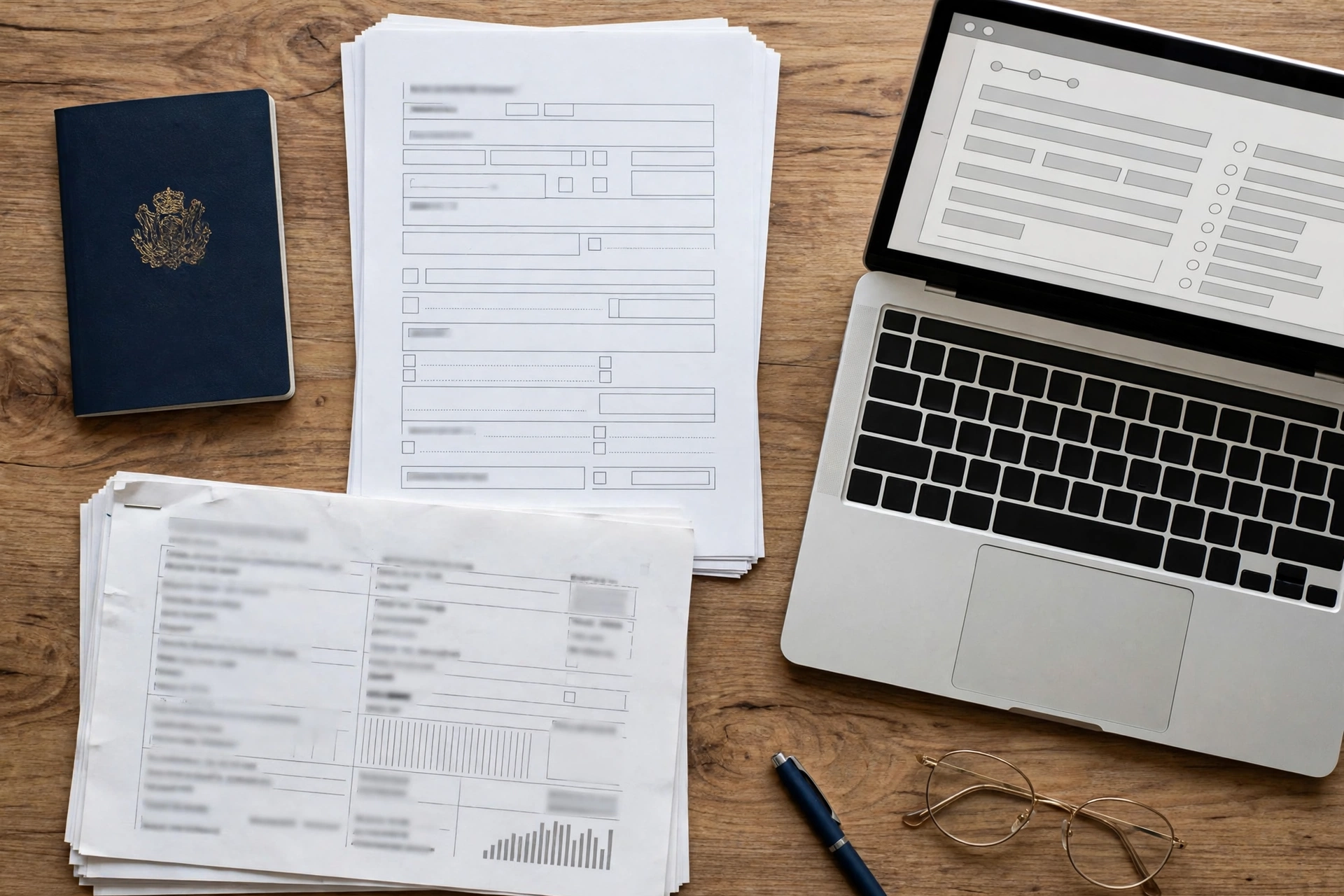
How to Apply, Step by Step
Step 1: Complete the DS-160 Online
Fill in Form DS-160 at ceac.state.gov, upload your photo, and print the confirmation page with the barcode. Have your passport, travel itinerary, and employment and education history ready before you begin. Check every answer twice — names, dates and travel history must match your passport and your documents exactly.
Step 2: Pay the $185 Fee and Book Your Interview
Pay the $185 MRV fee through the designated payment channel for your country and keep the receipt. Then create your profile on the official appointment service for your country and book your interview at your local US embassy or consulate. Book as early as you can — the wait for an interview is measured in months, not weeks, at many posts (see the wait times below).
Step 3: Gather Your Documents
Collect every item in the checklist at the top of this article. The four required items are your passport, your DS-160 confirmation page, your fee receipt and your photo. The supporting documents — proof of your trip's purpose, proof of your ties to your home country, and proof you can pay for the trip — are what the consular officer will actually want to see.
Step 4: Attend the Interview
Go to the embassy or consulate on your appointment date and time, and arrive early — check your embassy or consulate's instructions and arrive in good time before your appointment. A consular officer will interview you to determine whether you qualify for a visitor visa. Ink-free, digital fingerprint scans are taken as part of the process, usually during the interview.
Step 5: Wait for the Decision
Most applicants are told the outcome at the interview. If your visa is approved, your passport is usually returned with the visa within about 5 working days, though it can take longer. If the officer needs further administrative processing, you will be told — most such cases are resolved within 60 days of the interview according to US Embassy guidance, though the appointment service says it can take up to 180 days. Do not make final travel plans or buy tickets until you have your visa in hand.
Step 6: Travel and Enter the United States
Travel only after your visa is issued. At the US port of entry, a CBP officer will decide whether to admit you and for how long — usually up to six months. Your visa's validity is not the same as your permitted stay: a visa valid for several years does not mean you can stay for that long.
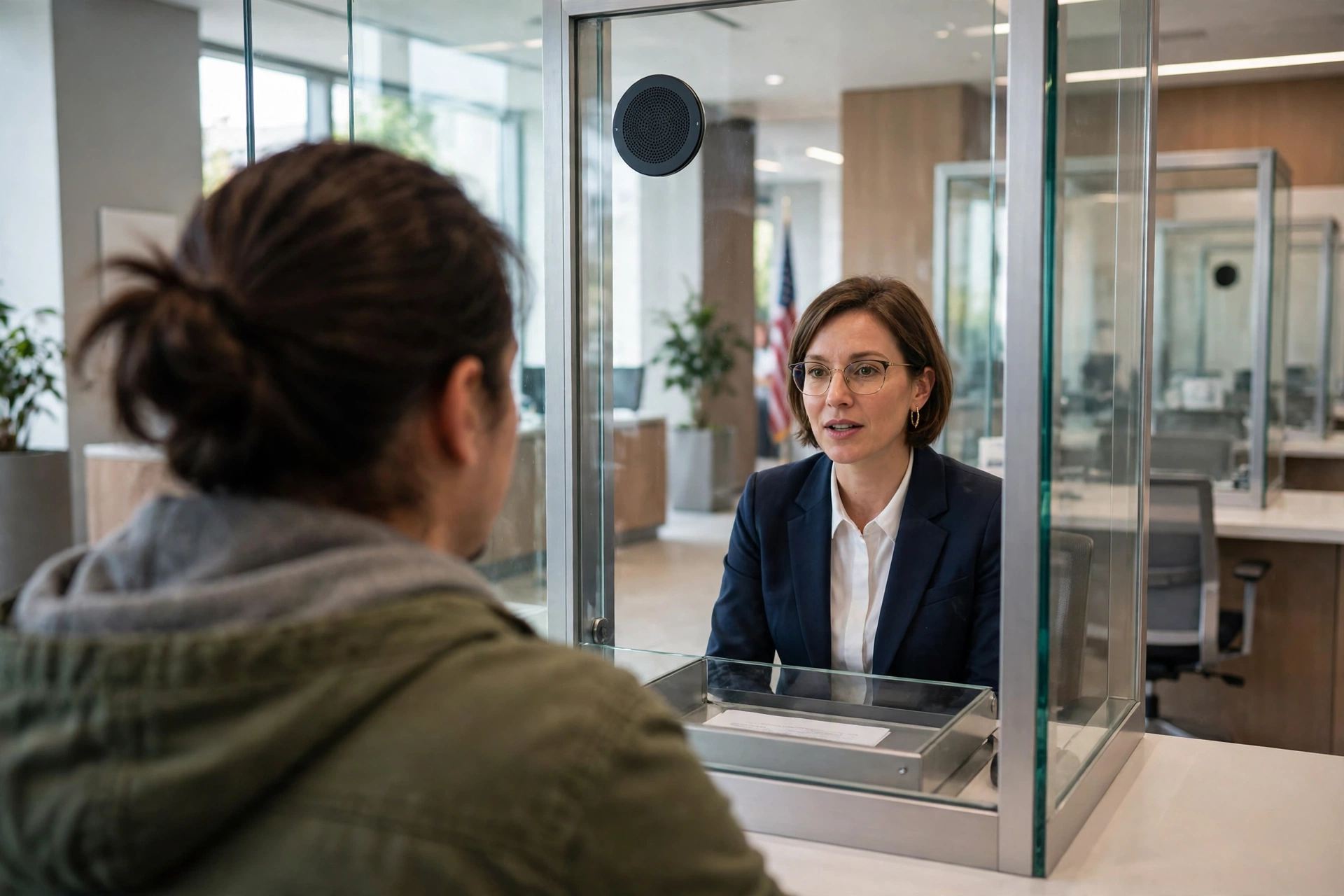
The Interview: What the Officer Is Really Deciding
The interview is short — usually three to five minutes — but it decides your application. Under US law, every visitor visa applicant is presumed to be an intending immigrant unless they can prove otherwise. That is the rule in Section 214(b) of the Immigration and Nationality Act, and it is the reason most B1/B2 refusals happen: the officer was not convinced the applicant would return home after the trip.
So the officer is really asking three questions. First, what is the purpose of your trip, and is it genuine? Second, do you intend to leave the United States after your trip? Third, can you pay for the trip? A steady job, a business you run, property, close family in your home country, and a history of travelling abroad and returning on time all help. An invitation letter from family or friends in the United States is not needed to apply for a visitor visa, and the State Department is explicit that it is not one of the factors used in determining whether to issue or deny the visa.
Answer in your own words, briefly and honestly. The officer has already read your DS-160, so repeating exactly what is on the form — and nothing that contradicts it — is the safest approach. Do not exaggerate your finances or your travel plans, and never submit a false document: attempting to obtain a visa by the wilful misrepresentation of a material fact, or fraud, may result in the permanent refusal of a visa or denial of entry into the United States.
Interview Waiver: Who Can Skip the Interview?
Interviews are generally required for visa applicants, with only limited exceptions, and a consular officer may require an interview of any applicant. The interview waiver program — sometimes called "dropbox" — used to let many renewals skip the interview, but the State Department narrowed it sharply in 2025, removing the age exemptions for applicants under 14 and over 79 and taking most visa categories out of the program entirely.
As of the State Department's updates effective September and October 2025, the only ordinary visitor applicants who may still qualify for an interview waiver are those renewing a full-validity B1, B2 or B1/B2 visa (or a Border Crossing Card) within 12 months of the prior visa's expiration, who were at least 18 years old when the prior visa was issued, and who are applying in their country of nationality or residence with no previous refusal and no apparent ineligibility. Diplomatic and official visa categories also remain eligible. Everyone else — including first-time applicants, children, and people renewing student (F), work (H-1B) or exchange visitor (J) visas — must now attend an in-person interview. Even if you meet the waiver criteria, the consular officer may still require an interview.
How Much Does a US Visitor Visa Cost?
There is one mandatory government fee for a B1/B2 visa, and it is the same for every applicant. The figures below are from the US Department of State, checked on 5 November 2026.
| Cost | Amount (per person) |
|---|---|
| MRV application fee — B1/B2 visitor visa | $185 (non-refundable, paid before the interview; receipt valid 365 days) |
| Visa issuance (reciprocity) fee | None — Whether you pay a separate issuance fee depends on your nationality — check the State Department's reciprocity schedule for your country; some nationalities pay no separate issuance fee for a B1/B2 visa |
| Visa Integrity Fee — $250 (created by US law in 2025) | Not currently collected — created by Public Law 119-21 and charged at issuance if collection begins, but it does not appear on the State Department's published fee schedule as of late October 2026. If collection begins, the total would become $185 + $250 = $435. |
| DS-160 form | Free — completed online at ceac.state.gov |
| Passport return / courier | Included in the process in most countries; any courier or visa-centre service charges are separate and small |
That is the full government cost for most applicants today: $185, paid once, whether the visa is approved or refused. Be very careful with anyone who asks for much more: dishonest agents have been reported charging several times the official fee for a "guaranteed" visa, while the official fee is only $185. No agent can guarantee a visa — the decision belongs to the consular officer alone.
Processing Time and Interview Wait Times
There are two different waits, and applicants often confuse them. The first is the wait for an interview appointment — the time between booking and sitting in front of the officer. The second is the processing time after the interview — the time between approval and getting your passport back with the visa.
The interview wait is the long one. The State Department publishes estimated appointment waits for every post, updated regularly — and they vary a lot from one embassy or consulate to another, and change with staffing and seasonal demand. Check the live wait-time tool on travel.state.gov for your local US embassy or consulate before you plan, and start the process a year or more before you want to travel. Never book non-refundable flights or hotels before the visa is in your passport.
The processing time after the interview is much shorter. For a straightforward approval, your passport is typically returned with the visa within about 5 working days. If your application needs further administrative processing — a "221(g)" review — the officer will tell you at the interview. Most such cases are resolved within 60 days of the interview according to US Embassy guidance, though the appointment service says it can take up to 180 days. You can track your case status on the CEAC visa status tracker at ceac.state.gov using your case number and passport details.
How Long Is a US Visitor Visa Valid?
Under the State Department's reciprocity schedule, B1/B2 visa validity and any issuance fee depend on your nationality — check the schedule for your country. In many cases the visa is issued as a multiple-entry visa valid for several years, which means you can travel to the United States multiple times without reapplying, as long as the visa remains unexpired. The officer can issue a visa for a shorter validity if your circumstances warrant it.
Do not confuse the visa's validity with how long you may stay. Each time you enter, the CBP officer decides your period of admission and records it on your I-94 — for B1/B2 visitors, usually up to six months per visit. If you need to stay longer than the date on your admission stamp or I-94, you must apply to extend your stay through US Citizenship and Immigration Services (USCIS) before that date. Failure to depart on time will result in you being out of status: under US law, the visas of individuals who are out of status are automatically voided, and any multiple-entry visa voided this way will not be valid for future entries. Overstaying can also make you ineligible for visas in the future. A valid US visa in an expired passport is still valid — do not remove it; use it together with your new valid passport.
Other US Visa Routes, Briefly
The B1/B2 is the right visa for visiting, but it is not the right visa for everything, and using it for the wrong purpose is a common reason for refusal. A Student visa (F-1) is for a full-time course at a US school or university, with its own SEVIS registration and an I-20 form from the school — you cannot study full-time on a visitor visa.
A work visa such as the H-1B is for a US employer to sponsor you for a specialty occupation; it is petition-based, which means the employer files a petition with USCIS first, and the visa application fee for petition-based categories is $205 rather than $185. An Exchange Visitor visa (J-1) is for approved exchange programs, and there are also fiancé(e) visas (K-1), immigrant visas for permanent residence, and the Diversity Visa lottery.
Common Reasons US Visitor Visa Applications Are Refused
Most refusals are not bad luck — they are the same few problems, repeated. The most common is Section 214(b): the officer was not convinced you would return home. Weak ties to your home country — no steady job, no business, no property, no family responsibilities, no travel history — make this the likely outcome, and no invitation letter or bank balance fixes it on its own. Other common reasons are: inconsistencies between the DS-160 and your interview answers; a travel purpose that does not match the visa category, such as planning to work or study; a previous overstay or visa violation; and submitting false documents or false information. If you are refused, read the refusal notice carefully — it states the section of law under which you were refused. For a 214(b) refusal there is no appeal, but you may reapply when your circumstances have genuinely changed, with stronger evidence.
Frequently Asked Questions About Getting a US Visa
How long does it take to get a US visitor visa?
The long part is waiting for the interview: wait times vary a lot by embassy and consulate, so check the current wait for your local US embassy or consulate on the State Department's Global Visa Wait Times page. After the interview, a straightforward approval usually means your passport is returned with the visa within about 5 working days. Start the process a year or more before you want to travel.
How much does a US visitor visa cost?
$185 per person, non-refundable, paid before the interview. Whether you pay a separate issuance fee depends on your nationality — check the State Department's reciprocity schedule for your country. A separate $250 Visa Integrity Fee was created by US law in 2025 but is not currently collected — if collection begins, the total would become $435. Always confirm the current fee on travel.state.gov before you pay.
Can I get a US visa without an interview?
Almost certainly not as a first-time applicant. Since the State Department's September 2025 changes, an interview waiver is available only in narrow cases — mainly renewing a full-validity B1/B2 visa that expired within the last 12 months, if you were at least 18 when it was issued — plus diplomatic and official categories.
How long can I stay in the US on a B1/B2 visa?
Up to six months per visit, as decided by the CBP officer at the port of entry and recorded on your I-94. The visa itself is often issued as a multiple-entry visa valid for several years, but that is not permission to stay for that long.
Can I work in the US on a visitor visa?
No. A person on a visitor visa (B1/B2) is not permitted to accept employment or work in the United States. You need a work visa, such as an H-1B sponsored by a US employer, to work legally.
Can I work in the US on a visitor visa?
No. A person on a visitor visa (B1/B2) is not permitted to accept employment or work in the United States. You need a work visa, such as an H-1B sponsored by a US employer, to work legally.
Sources and Disclaimer
Sources (checked 5 November 2026): US Department of State — Visitor Visa (B-1/B-2) (what it allows, how to apply, required documents, interview, entry), Fees for Visa Services ($185 non-petition-based fee; $205 petition-based fee), Global Visa Wait Times (check the current wait for your local US embassy or consulate) and the State Department's interview waiver updates of July and September 2025 (waiver narrowed; under-14 and over-79 exemptions removed). Appointment service: ustraveldocs.com (select your country). US visa fees, wait times and rules change — always re-check travel.state.gov and ustraveldocs.com before you apply or pay.
Disclaimer: This article is general information, not immigration advice. It does not replace the official guidance of the US Department of State or advice from a licensed immigration attorney. If your case is complicated — a previous refusal, a criminal record, a prior overstay, or a medical-treatment trip — speak to a licensed attorney before you apply.