
When you first encounter the idea of making cookies from scratch without a single tablespoon of all-purpose flour, cornstarch, or almond meal, it is completely natural to feel skeptical. Traditional home baking drills a fundamental rule into our minds: flour forms the structural skeleton of every dough, trapping moisture and providing the chew that prevents a cookie from melting into liquid grease. However, baking 3 ingredient peanut butter cookies without flour completely flips conventional baking wisdom on its head.
These 3 ingredient peanut butter cookies without flour do not rely on standard starches to build structure. Instead, they exploit the natural molecular makeup of roasted peanuts and fresh whole eggs. The result is not an inferior compromise or a crumbly diet substitute; these 3 ingredient peanut butter cookies without flour produce a deeply aromatic, intensely rich cookie featuring crisp caramelized edges and a dense, fudgy, chewy center that rival classic bakery treats.
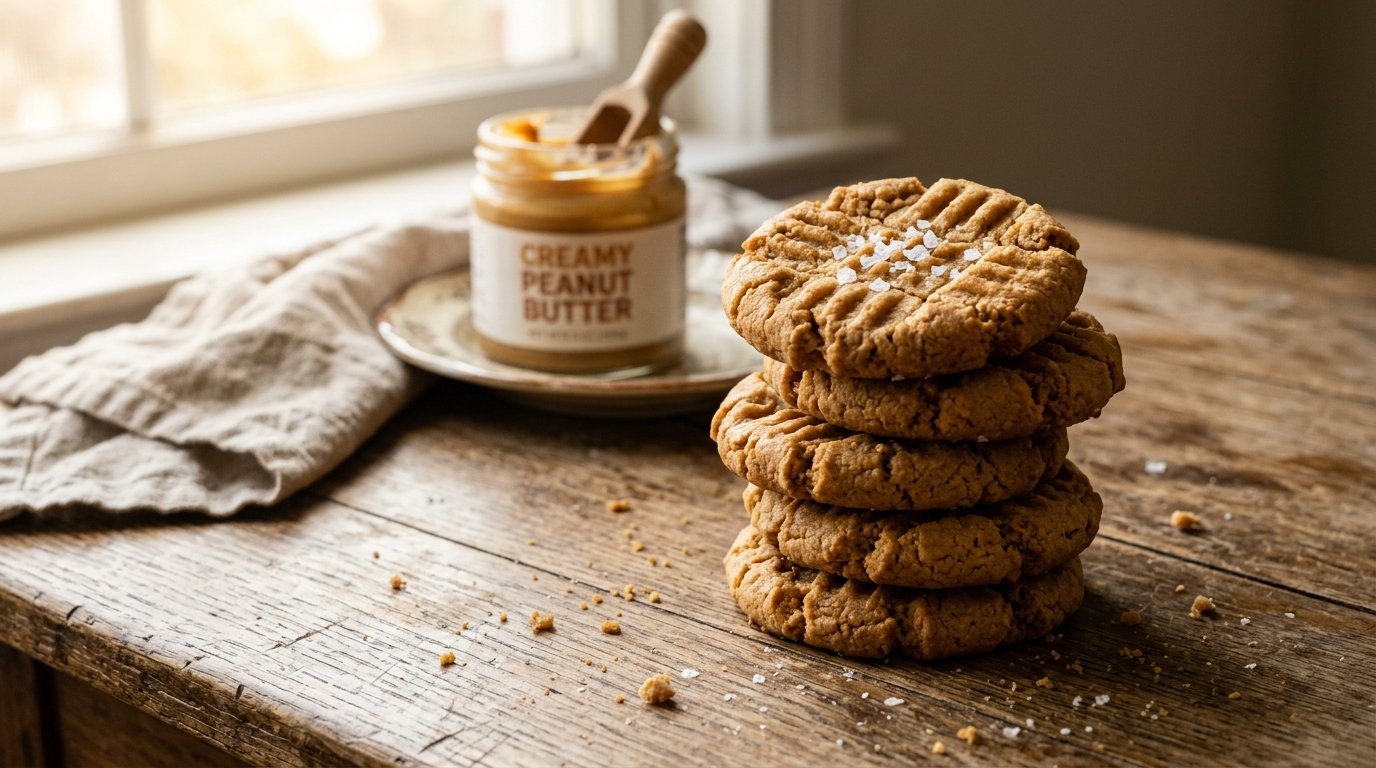
The Culinary Science Behind 3 Ingredient Peanut Butter Cookies Without Flour
To master baking 3 ingredient peanut butter cookies without flour, it helps to look at what happens inside the mixing bowl at a chemical level. In typical drop cookies, wheat proteins (gliadin and glutenin) hydrate in water to form gluten networks that hold butter and sugar in suspension. When baking 3 ingredient peanut butter cookies without flour, structure comes from two entirely different culinary reactions: protein coagulation and hygroscopic sugar matrix binding.
Commercial creamy peanut butter contains roughly 25% plant protein alongside natural roasted peanut oils. When you vigorously stir an egg into the peanut butter, the liquid egg white dissolves the granulated sugar crystals, while the lecithin in the egg yolk acts as a natural emulsifier. As these 3 ingredient peanut butter cookies without flour enter the hot oven, the egg proteins coagulate between 145°F and 158°F (63°C–70°C). This heat-set egg matrix encapsulates the peanut oils and molten sugar, ensuring your 3 ingredient peanut butter cookies without flour bake into sturdy, tender discs rather than collapsing across the pan.
Why You Will Master These 3 Ingredient Peanut Butter Cookies Without Flour
- Pure Uncut Flavor: Wheat flour naturally absorbs and dulls aromatics. Because there is no grain in these 3 ingredient peanut butter cookies without flour, you get pure, unadulterated roasted peanut decadence in every single crumb.
- Rapid Kitchen Turnaround: You can go from an empty countertop to pulling a fresh batch of 3 ingredient peanut butter cookies without flour out of your oven in less than 20 minutes flat.
- Zero Expensive Machinery: You do not need a stand mixer, food processor, or hand beaters. A standard mixing bowl and a simple spoon are all that stand between you and warm 3 ingredient peanut butter cookies without flour.
- Naturally Dietary Friendly: These 3 ingredient peanut butter cookies without flour are naturally 100% gluten-free, dairy-free, and oil-free without requiring costly specialty pantry ingredients.
The 3 Vital Ingredients Broken Down
Because there are only three elements in these 3 ingredient peanut butter cookies without flour, selecting the right ingredients determines your final texture, chewiness, and structural integrity.
1. Creamy Shelf-Stable Peanut Butter (1 Cup / 250g)
The choice of peanut butter is pivotal when making 3 ingredient peanut butter cookies without flour. Standard commercial creamy peanut butter (such as Jif, Skippy, or conventional supermarket store brands) provides the most reliable foundation. These commercial formulations contain tiny amounts of hydrogenated vegetable oil and salt that keep the peanut solids in permanent suspension. This stability ensures that your 3 ingredient peanut butter cookies without flour hold their shape and roll cleanly without leaving greasy residue on your fingers.
Can you use natural peanut butter? You certainly can make 3 ingredient peanut butter cookies without flour using all-natural peanut butter (where the only ingredients are peanuts and salt), but you must stir the jar until every trace of separated oil is completely integrated. If your natural peanut butter feels runny, chill the jar in your refrigerator for 45 minutes before measuring; otherwise, your 3 ingredient peanut butter cookies without flour will spread excessively on the baking tray.
2. Granulated White Sugar (1 Cup / 200g)
In this recipe, white sugar is not merely a sweetener—it is a functional building block. As the 3 ingredient peanut butter cookies without flour bake, granulated sugar melts and bonds with the egg moisture. Upon cooling, the dissolved sugar recrystallizes slightly, giving these 3 ingredient peanut butter cookies without flour their delicate crisp rims and chewy interiors.
If you prefer deeper notes of molasses and caramel, you can substitute light or dark brown sugar. Packed brown sugar will yield softer, fudgier 3 ingredient peanut butter cookies without flour, whereas white granulated sugar produces a crispier exterior edge.
3. Large Fresh Egg (Room Temperature)
The egg provides moisture, protein scaffolding, and emulsification. Using a room-temperature egg is critical when preparing 3 ingredient peanut butter cookies without flour. A cold egg straight out of the refrigerator will cause the peanut oils to stiffen immediately upon contact, making the dough tough to stir and difficult to shape into smooth spheres.
Step-by-Step Instructions: Crafting 3 Ingredient Peanut Butter Cookies Without Flour
Step 1: Oven Calibration and Pan Preparation
Position your oven rack in the center slot and preheat your oven to 350°F (175°C). Line a large heavy-gauge baking sheet with unbleached parchment paper or a silicone baking mat. Do not grease the baking sheet with non-stick cooking spray; the natural fats present in 3 ingredient peanut butter cookies without flour are more than sufficient to prevent sticking, and additional spray can cause the cookie bottoms to scorch prematurely.
Step 2: Mixing the Emulsion
In a wide mixing bowl, combine your 1 cup of creamy peanut butter, 1 cup of granulated sugar, and 1 large room-temperature egg. Using a sturdy silicone spatula or wooden spoon, stir vigorously. Initially, the mixture will appear loose, glossy, and slightly separated. Continue stirring steadily for 60 to 90 seconds. As the egg proteins absorb the sugar and bind with the peanut paste, you will observe the mixture suddenly transition into a matte, cohesive, pliable dough that cleanly pulls away from the edges of your bowl. This transformation signals that your 3 ingredient peanut butter cookies without flour dough is properly emulsified.
Step 3: Portioning and Shaping
Using a standard 1-tablespoon cookie scoop, portion the dough into even 1-inch balls (roughly 25 to 28 grams each). Roll each portion between the clean palms of your hands until smooth and spherical. Space the dough balls roughly 2 inches apart on your parchment-lined baking sheet. Because 3 ingredient peanut butter cookies without flour lack chemical leaveners like baking soda or baking powder, they will not spread outward significantly on their own.
Step 4: Imprinting the Classic Crosshatch Pattern
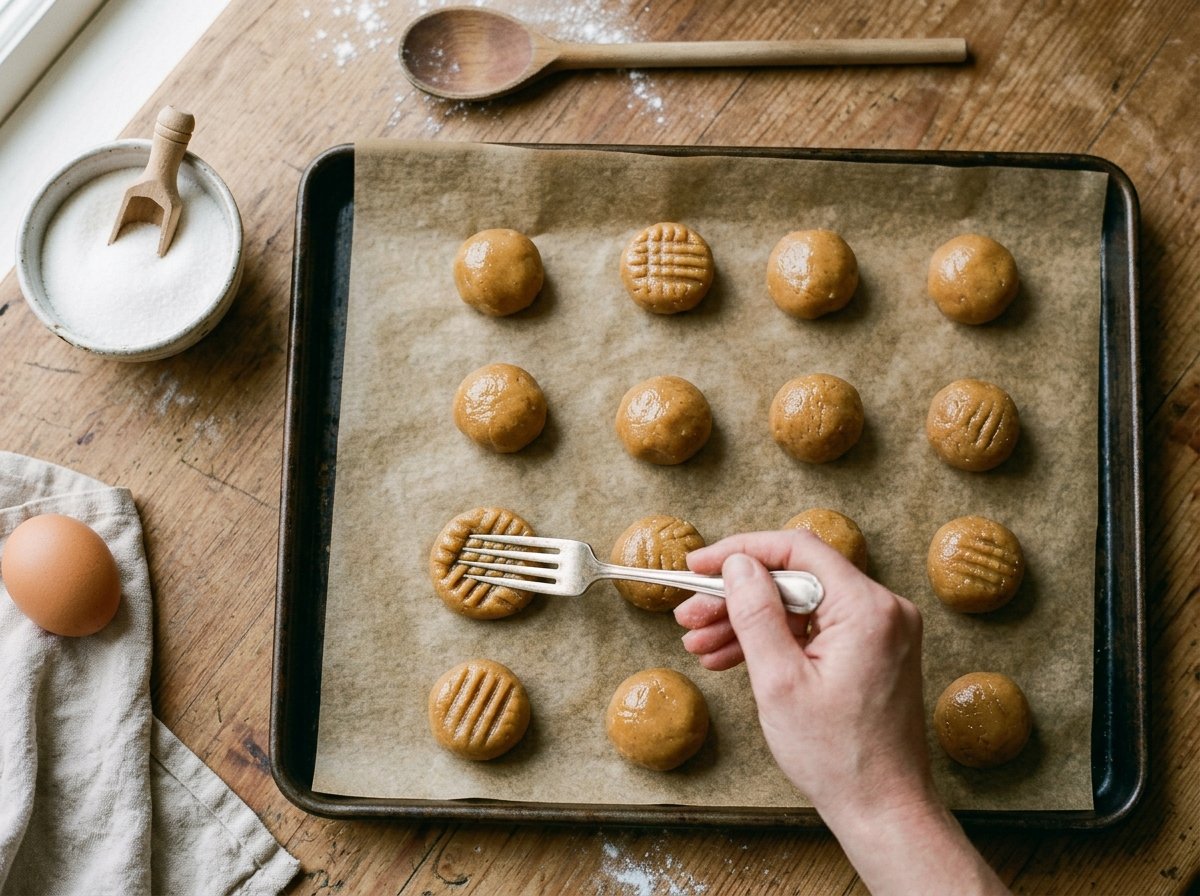
The iconic criss-cross pattern on peanut butter cookies is not just decorative—it serves an essential mechanical function. Flattening the dough ensures uniform heat penetration across the center of these 3 ingredient peanut butter cookies without flour. Take a standard dinner fork, gently press down into the center of a dough ball until it is flattened to roughly 1/2-inch thickness, lift, rotate the fork 90 degrees, and press again. If the fork tines cling to the dough, dip the fork into a small dish of granulated sugar between cookies. This coats the tines and leaves a crunchy sugar sparkle on your baked 3 ingredient peanut butter cookies without flour.
Step 5: Precision Baking
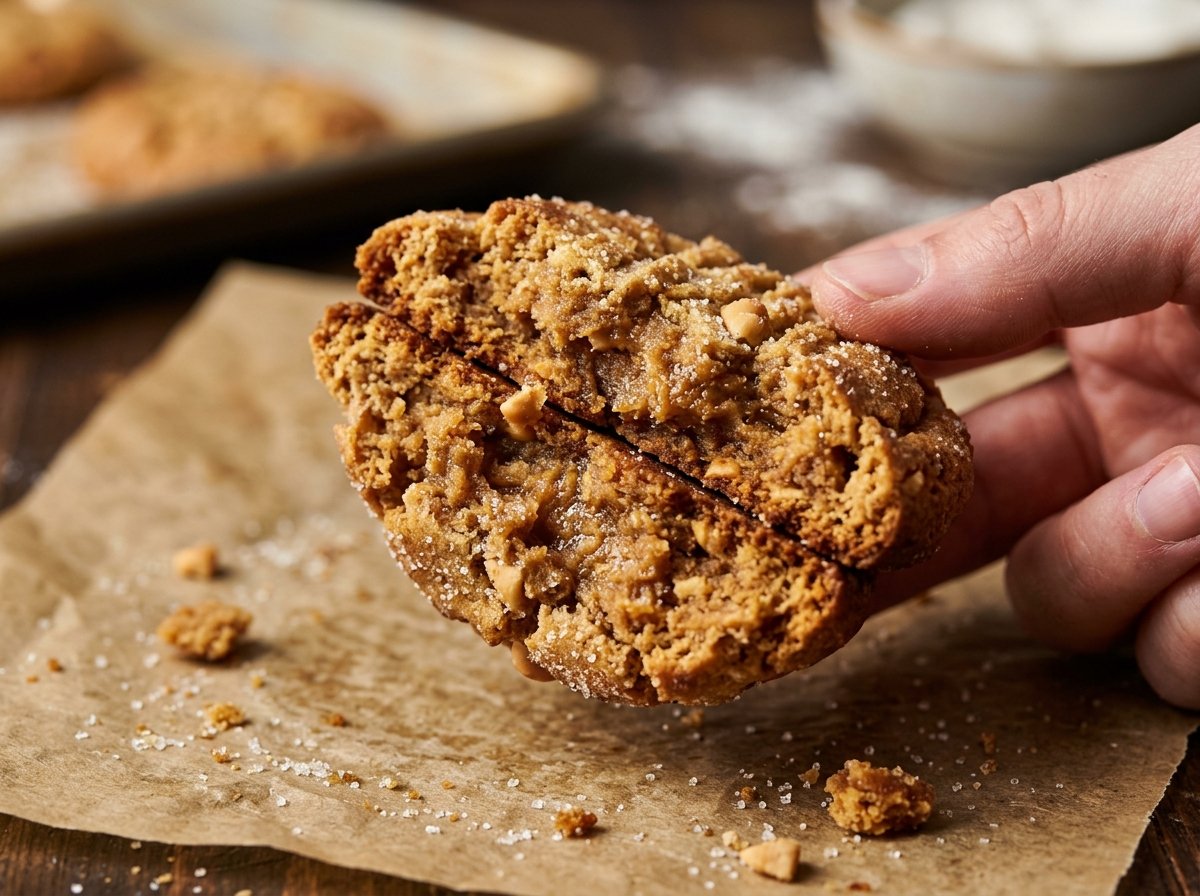
Slide the baking sheet onto the middle oven rack. Bake at 350°F (175°C) for 10 to 12 minutes. Keep a close eye on your oven window past the 9-minute mark. Your 3 ingredient peanut butter cookies without flour are perfectly baked when the perimeter edges appear dry, set, and lightly browned, while the center sections remain soft and delicate. Avoid waiting for the centers to brown, as overbaking will strip the chewiness from your 3 ingredient peanut butter cookies without flour.
Step 6: The Mandatory Cooling Rest
When you remove the baking sheet from the oven, resist every temptation to transfer the cookies immediately. Fresh from the oven, 3 ingredient peanut butter cookies without flour are exceptionally fragile because the molten sugar and egg matrix have not set. Allow the cookies to rest undisturbed on the warm metal baking sheet for a full 10 minutes. The residual pan heat gently finishes setting the centers. After 10 minutes, glide a thin metal spatula underneath each cookie and transfer them onto a wire rack to cool completely into firm, chewy discs.
Crucial Mistakes That Ruin 3 Ingredient Peanut Butter Cookies Without Flour
Even though the ingredient list is minimal, small errors can alter the texture of your 3 ingredient peanut butter cookies without flour. Here is how to sidestep the most common home kitchen pitfalls:
1. Premature Handling on the Baking Sheet
The most common complaint from novice bakers making 3 ingredient peanut butter cookies without flour is that their cookies crumbled upon lifting. This almost always happens because they attempted to lift the cookies immediately after pulling them from the oven. The structural integrity of 3 ingredient peanut butter cookies without flour develops primarily during the 10-minute resting period as the sugar cools and crystallizes.
2. Overbaking Past the Golden Threshold
Because there is no gluten or starch to buffer moisture evaporation, leaving 3 ingredient peanut butter cookies without flour in the oven for even 2 to 3 minutes too long will transform a rich, chewy crumb into dry, sandy crumbs. Remember that cookies continue baking for several minutes after removal from the oven due to retained pan heat.
3. Using Loose, Unstirred Natural Peanut Butter
If you scoop natural peanut butter straight from the top of an unstirred jar where oils have pooled, that excess oil will separate during baking. Your 3 ingredient peanut butter cookies without flour will fry in their own fat on the tray, resulting in greasy edges and a soggy center. Always stir natural nut butters thoroughly until homogenous before measuring.
4. Forgetting to Flatten the Dough Balls
In traditional baking, melting butter causes cookie dough to spread naturally across the tray. Since 3 ingredient peanut butter cookies without flour contain no dairy butter or chemical leaveners, spherical balls will remain largely spherical in the oven, resulting in burnt bottoms and raw centers. Pressing them down with a fork is essential for even heat conduction.
Flavor Variations and Gourmet Twists
While the purist version of 3 ingredient peanut butter cookies without flour is beloved for its simplicity, this resilient dough accepts an array of delicious add-ins:
- Flaky Sea Salt Garnish: Sprinkle coarse Maldon sea salt across the warm fork-pressed tops right before baking. The sharp saline crystals provide an exquisite contrast to the sweet roasted peanut dough in these 3 ingredient peanut butter cookies without flour.
- Semi-Sweet Chocolate Chips: Fold 1/2 cup of mini dark or semi-sweet chocolate chips into the mixed dough. Mini chips work far better than jumbo chips in 3 ingredient peanut butter cookies without flour because they do not tear the delicate dough apart during fork pressing.
- Warm Vanilla & Autumn Spice: Stir 1 teaspoon of pure vanilla extract and 1/2 teaspoon of ground cinnamon into the dough to give your 3 ingredient peanut butter cookies without flour an aromatic bakery warmth.
- Artisan Chocolate Dipping: Once your baked 3 ingredient peanut butter cookies without flour have cooled completely on wire racks, dip half of each cookie into melted 70% dark chocolate. Place them on wax paper until the chocolate shell hardens for a show-stopping presentation.
- Crunchy Nut Additions: For an assertive textural contrast, swap creamy peanut butter for crunchy peanut butter or fold in 1/3 cup of finely crushed toasted peanuts to elevate the crunch of your 3 ingredient peanut butter cookies without flour.
Comprehensive Storage and Freshness Guide
Proper storage ensures your batch of 3 ingredient peanut butter cookies without flour retains its moist, fudgy center and crisp rims for days after baking:
Room Temperature Storage
Store fully cooled 3 ingredient peanut butter cookies without flour in an airtight glass or BPA-free plastic container at room temperature for up to 7 days. Separate stacked layers with sheets of wax or parchment paper to prevent them from adhering to one another. If you live in an arid climate, place a quarter slice of fresh white sandwich bread inside the container; the 3 ingredient peanut butter cookies without flour will draw ambient moisture from the bread, remaining tender for over a week.
Freezing Baked Cookies
To freeze baked 3 ingredient peanut butter cookies without flour, lay them in a single layer on a parchment-lined baking sheet and freeze for 1 hour until rock-solid. Transfer the frozen cookies into heavy-duty freezer bags, squeezing out excess air. They will maintain peak flavor for up to 3 months. When cravings hit, simply pull individual 3 ingredient peanut butter cookies without flour from the freezer and allow them to thaw at room temperature for 15 minutes.
Freezing Raw Dough for On-Demand Baking
You can prepare the dough for 3 ingredient peanut butter cookies without flour in advance. Shape the dough into balls, stamp them with your fork, and freeze the raw discs on a baking tray until solid. Transfer to a sealed freezer container. You can bake frozen 3 ingredient peanut butter cookies without flour straight from the freezer at 350°F (175°C)—simply add 2 extra minutes to the total bake time.
Troubleshooting Your Flourless Bakes
Why Did My Cookies Spread Too Thin?
If your 3 ingredient peanut butter cookies without flour melted flat across the pan, the primary culprit is excess liquid or overly warm fat. This happens if you used an extra-large jumbo egg, an oily natural peanut butter, or if your kitchen was very warm. To fix this, place the mixed dough bowl of your 3 ingredient peanut butter cookies without flour into the refrigerator for 20 to 30 minutes before shaping.
Why Are My Cookies Falling Apart and Crumbly?
Crumbly 3 ingredient peanut butter cookies without flour occur under three conditions: the cookies were disturbed before completing their 10-minute pan rest, the cookies were overbaked, or the sugar ratio was drastically reduced. Remember that dissolved sugar provides essential structural cohesion in 3 ingredient peanut butter cookies without flour.
Can I Reduce the Sugar in This Recipe?
You can safely reduce the granulated sugar in these 3 ingredient peanut butter cookies without flour from 1 cup down to 3/4 cup without structural compromise. However, cutting the sugar below 3/4 cup will destabilize the egg emulsion, resulting in 3 ingredient peanut butter cookies without flour that are excessively soft, fragile, and prone to breaking.
Frequently Asked Questions
Can I make 3 ingredient peanut butter cookies without flour using an egg substitute?
Yes. If you adhere to an egg-free or vegan diet, you can prepare 3 ingredient peanut butter cookies without flour by using a standard flax egg (1 tablespoon finely ground flaxseed meal whisked with 2.5 tablespoons warm water, rested for 5 minutes until viscous). While the cookies will be slightly more delicate than those made with whole eggs, your 3 ingredient peanut butter cookies without flour will still hold together and bake beautifully.
Can I use almond butter or cashew butter instead?
Absolutely! The 1:1:1 ratio used in these 3 ingredient peanut butter cookies without flour applies seamlessly to smooth almond butter, cashew butter, and sunflower seed butter (SunButter). If using sunflower seed butter, note that the chlorophyll in sunflower seeds can occasionally react with heat to create a greenish hue inside, but your cookies remain delicious and school-safe.
Do I need to chill the dough before baking?
Chilling is not mandatory for standard commercial peanut butter dough. However, if you are baking in a warm environment or utilizing all-natural, drippy nut butter, chilling the dough of your 3 ingredient peanut butter cookies without flour for 20 minutes ensures neat, easy rolling and prevents excess spreading.
How many calories are in each cookie?
When divided into 16 evenly portioned treats, each of these 3 ingredient peanut butter cookies without flour contains approximately 112 calories, 4 grams of protein, 8 grams of plant-based fats, and 15 grams of carbohydrates, making them an energizing, protein-dense sweet snack.
3 Ingredient Peanut Butter Cookies Without Flour
The ultimate foolproof recipe for chewy, tender, and naturally flourless peanut butter cookies. Ultra-rich flavor with crisp edges and a soft fudgy middle.
Ingredients
Click items to check off as you bakeBaker's Secret: Always use a room-temperature egg. A cold egg straight from the fridge will cause peanut butter oils to stiffen immediately, making it hard to roll smooth spheres.
Step-by-Step Instructions
-
1Preheat & Line: Preheat your oven to 350°F (175°C) with the rack in the middle. Line a baking sheet with parchment paper. Avoid non-stick cooking spray.
-
2Emulsify the Dough: In a mixing bowl, combine creamy peanut butter, granulated sugar, and the egg. Stir vigorously with a spatula for 60 to 90 seconds until the batter turns matte, thickens, and cleanly leaves the sides of the bowl.
-
3Portion & Roll: Scoop 1-inch portions (about 25g each) and roll between your clean palms into smooth spheres. Place them 2 inches apart on the baking sheet.
-
4Fork Crosshatch: Gently press each dough ball with a dinner fork in a criss-cross pattern to flatten to 1/2-inch thickness. Dip fork tines in sugar if they stick.
-
5Bake to Light Golden: Bake at 350°F (175°C) for 10 to 12 minutes. Remove as soon as the edges look set and light golden. The centers should still be soft.
-
6The Mandatory 10-Minute Pan Rest: Let the cookies rest undisturbed on the warm pan for 10 minutes to firm up. Then transfer with a spatula to a wire rack to cool completely.
Pingback: Brown Butter Chocolate Chip Cookies Without Brown Sugar (Chewy & Toffee Rich) -
Pingback: Chewy Condensed Milk Cookies with 3 Ingredients - Firaa Bakes
Pingback: Fudgy Nutella Brownies with 3 Ingredients - Firaa Bakes
Pingback: Biscoff Butter Cookies with 4 Ingredients - Firaa Bakes
Pingback: 3 Ingredient Banana Oatmeal Cookies - Firaa Bakes
Pingback: 4 Ingredient Nutella Cookies - Firaa Bakes