
CallBomber: Feature, Uses, Risk and Legal Alternatives.
The mobile communication is extremely important in the life of the modern world. Nonetheless, as this convenience emerges, there is the increase of different online tools, which hack into or use calling systems. The CallBomber is one of such controversial tools, especially during the call boom. The word has become a commonplace in the internet, and especially among technology lovers and tricksters. Although it may seem as an innocent application that can be used to have fun, the reality is that it may raise serious ethical and legal issues. This paper explains what CallBomber is and details how it operates, risks and some safe, legitimate alternatives.
What is CallBomber?
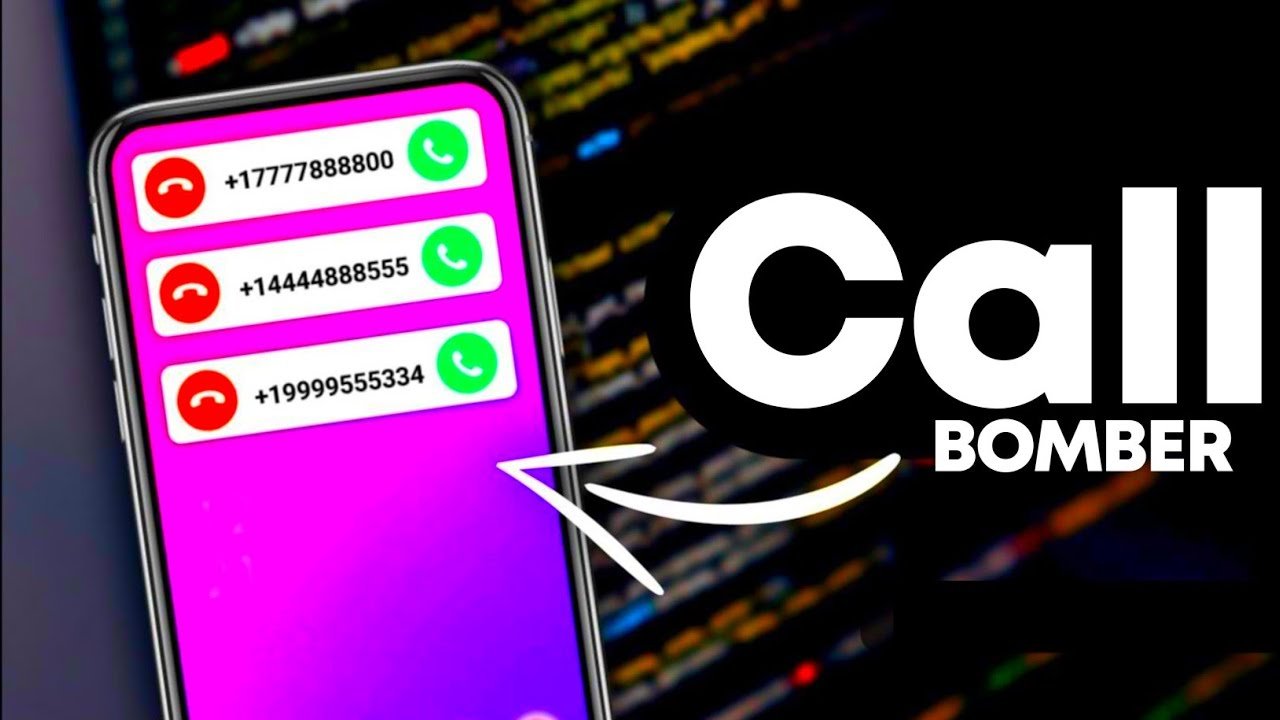
A CallBomber is a kind of online tool, application, or script that is created to call a particular phone number several times in a short period of time automatically. Basically, it floods the target figure with calls and usually with the intention of pranking someone or saturating his or her phone line.
As the call boom continues, understanding tools like CallBomber is essential for users.
These tools can be found in some cases as:
Websites (portals of online call bombing)
- Android APKs or iOS apps.
- Scripts or bots (through Telegram, Discord, or Python scripts of their own)
- The CallBomber can enable the user to:
- Enter a target number
- Choose the amount of calls in which to make.
- Specify time intervals between calls.
- One click will execute the process.
Although some may find this amusing, when it is utilized in an irresponsible manner it can easily become digital harassment.
How Does CallBomber Work?
A CallBomber works on the basis of utilizing the online APIs (Application Programming Interfaces) of the telecommunication gateways or other voice or verification calls. Legitimate companies usually use these APIs to perform such purposes as:
- Making OTP (One Time Password) calls.
- Making of marketing or promotional calls.
- dealing with customer authentication.
Nevertheless, these APIs are abused by CallBomber tools to make automatic multiple call requests to a particular number at a time. Every request makes a new call and this floods the phone of the recipient so that he/she cannot use the phone normally.
Successful CallBombers are also capable of disguising the IP address or number of the sender, thus, it becomes difficult to detect the source of the attack. Owing to this, the telecom operators and cybersecurity experts consider call bombing as a cyber abuse.
Typical Characteristic of CallBomber Tools.
Despite the fact that various versions of CallBomber could have some differences, the majority of them have some similar features, including:
- Bulk Call Attack:
Make dozens or hundreds of calls, to one number, in minutes. - Custom Call Intervals:
Select the rate at which calls are transmitted (e.g. every 2 seconds or every 10 seconds). - Anonymous Execution:
Cover the identity of the attacker with the help of proxy or VPN connections. - Multi-Mode Functionality:
Others contain SMS bombing as well as Call bombing capabilities. - Free or Paid Access:
Numerous CallBombers are free, with some of the better versions having an offer of faster or unlimited bombing. - Cross-Platform Availability:
Works with web browsers, Android applications or automated Telegram bots.
Although these features might look great or entertaining in case of testing, they provide a serious implication when they are used in malicious intent.
Legal and Ethical Implications.
In most countries such as Pakistan, India, United States and the European Union, it is an illegal act to utilize a CallBomber. Here’s why:
- Violation of Privacy:
Calling someone repeatedly without his/her approval is harassment. - Telecommunication Systems: The misuse of Telecommunication Systems is not covered here.
Telecom networks are developed to be used in legitimate communication. Deliberately overloading them interferes with service provision and it goes against the rules of use. - Criminal Charges: There is a possibility of criminal charges being brought against the contractor.<|human|>Criminal Charges: Criminal charges may be initiated against the contractor.
Jurisdiction On the one hand, call bombing may be classified as cybercrime, intrusion, or disrupting communications. Violators of this may be fined, sued or even imprisoned. - Digital Reputation Damage:
By working with such tools, it is possible to damage an individual or professional appearance. Once associated with cyber harassment, it is hard to repair credibility. - Service Provider Bans:
The Internet Service Providers (ISPs) or the mobile carriers are capable of blocking the numbers or IPs that are being used to carry out the bombing activities. - To recap it all however, even though some individuals would term CallBomber tools as a couple of harmless pranks, it is usually seen as a serious offense in the eyes of the cyber laws.
Dangers of using CallBomber Tools.
Besides legal concerns, users must also be acquainted with the individual danger of using CallBomber apps or websites.
- 1. Data Theft:
- Some CallBomber websites also demand personal information such as your phone number, IP address or email. These sites can steal or sell your information to a third party, spammer or hackers.
- 2. Malware Infection:
- Many APKs of CallBomber even have viruses, adware, and spyware that are usually unable to be spotted and can damage your phone, steal your banking information, or break passwords.
- 3. Account Suspension:
- In the case the CallBomber is linked to your social media, Google, or Telegram account, he is likely to face suspension because of breaking the service conditions.
- 4. IP Tracking:
- Even with a VPN, cybersecurity services or telecommunication organizations can track down illegal bombing activity to your network address.
- 5. Fake or Scam Sites:
- Numerous websites that claim to bomb calls are shams and they will lure you into filling out surveys or downloading viral files under the guise of accessing bombing services.
- Due to such reasons, it is highly recommended not to use or distribute any call bombing tools on the Internet.
Safe and Legal Alternatives
Perhaps a developer, marketer or tester, you still may wish to test call or message systems in a legitimate manner. Some of the safe and ethical alternatives to CallBomber tools are as follows:
- 1. API Testing Tools:
- Send automated test calls using legitimate testing environments such as twilio, nexmo, or plivo. These services enable its official testing.
- 2. Load Testing Software:
- Rather than bombing scripts, consider using the assistance of professional load testing scripts such as Apache JMeter or Postman to study performance safely.
- 3. Communication Simulators:
- To the developers of communication apps, simulators will be capable of simulating call flows without placing actual calls.
- 4. The following are marketing automation platforms:
- In case you want to target a vast number of people, consider the tested marketing tools such as HubSpot, Sendinblue, or Zoho Campaigns. These tools are in line with laws of data protection and anti-spam.
Ethical Awareness and Education.
The education on cybersecurity can be useful when learning about CallBomber tools. Such tools are also typically studied by ethical hackers and IT professionals to learn the vulnerabilities and avoid attacks. They however do this within controlled settings and with the express permission of system owners.
In case you feel like reading about cybersecurity:
- Do ethical hacks, penetration testing or cyber law classes.
- Simulation of attacks should be done in responsibility using sandboxed environments.
- Ethical and legal principles should always be observed in the process of experimentation.
- In this manner, you will be able to develop technical abilities whilst making a positive contribution to the electronic community.
Final Thoughts
At a glance, the CallBomber might seem to be an innocent pranking utility as well as entertaining, yet when used improperly it can cause severe results. Legal issues and data theft are just the tip of the iceberg compared to the threats the temporary entertainment it offers carries.
It is imperative as a digital citizen to realize that internet freedom is a responsibility. Such people should not be occupied with call bombing but with learning to be ethical hackers, cybersecurity, or app designers, which would save more people than cause them harm.
Finally, moving forward, the word CallBomber will still be used on the internet, but it is important to note that it will still remain a representation of misuse and not innovation. Never use illicit, unsafe, and dubious means of communication or testing. It is not about asking the question of how to take advantage of technology but to apply it in a judicious manner to establish a safer digital future.